“Behind the Scenes and On the Stage with Joanie 4 Jackie“
Astria Suparak
THE GETTY: The Iris
February 2, 2017
Archived link: https://web.archive.org/web/20190503012310/https://blogs.getty.edu/iris/behind-the-scenes-and-on-the-stage-with-joanie-4-jackie/
Excerpt:
Joanie 4 Jackie was an underground film network formed by artist Miranda July in 1995. For more than a decade this project fomented a generation of female-identified filmmakers—inspiring girls to make movies for the first time, circulating work by seasoned artists to places their distributors and gallerists couldn’t reach, documenting films that hadn’t yet been made, and connecting people across the country through booklets of letters that arrived with each videotape. By the time the project had run its course the work of over 200 filmmakers was distributed through 22 compilation tapes, and Joanie 4 Jackie exhibited from Vancouver to Monterrey to Ljubljana in spaces from punk clubs to the Museum of Modern Art.
The J4J archive, consisting of video tapes, fliers, personal correspondence, grant applications, research notes, press materials, and other ephemera, was just acquired by The Getty Research Institute.
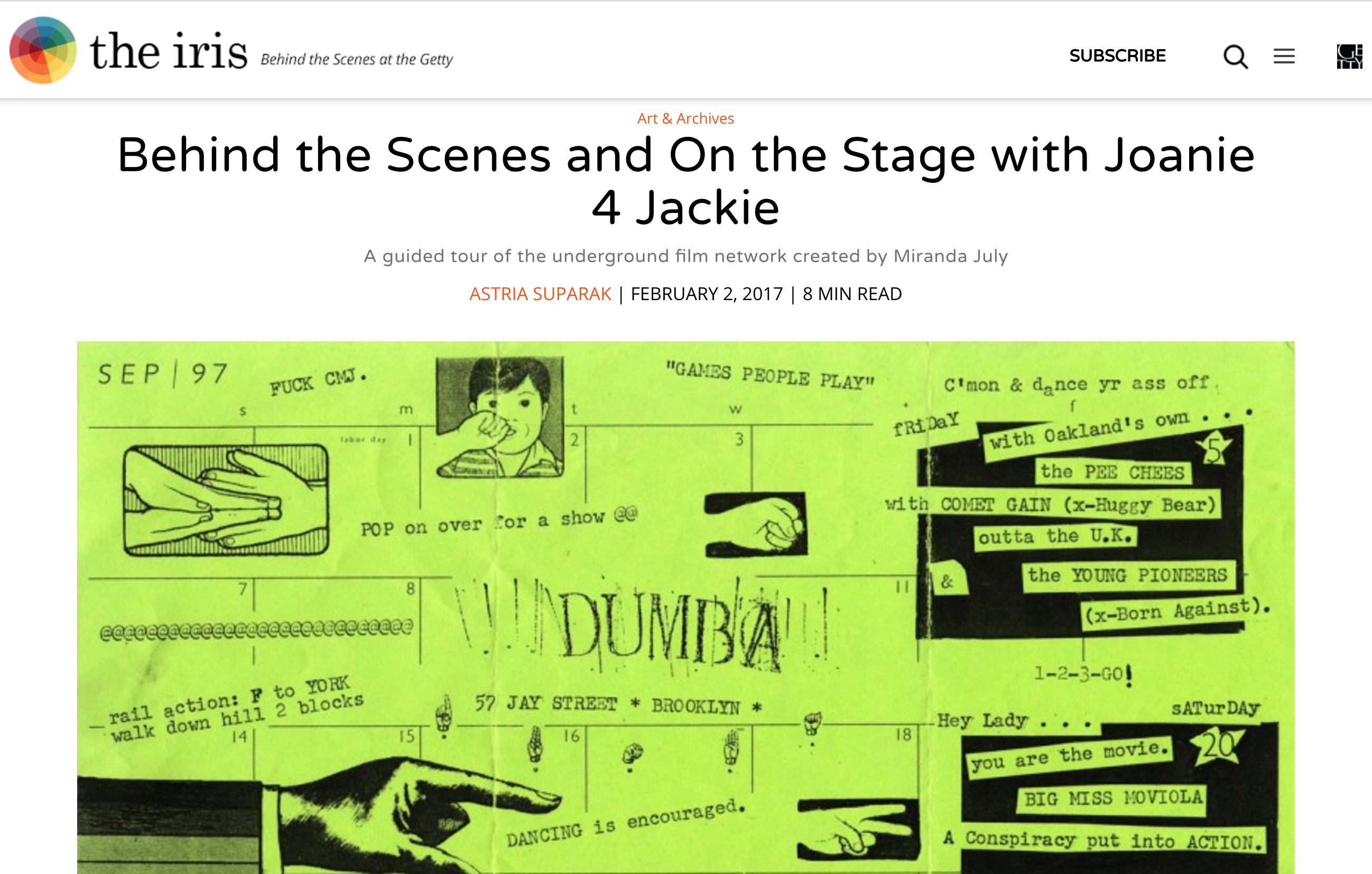
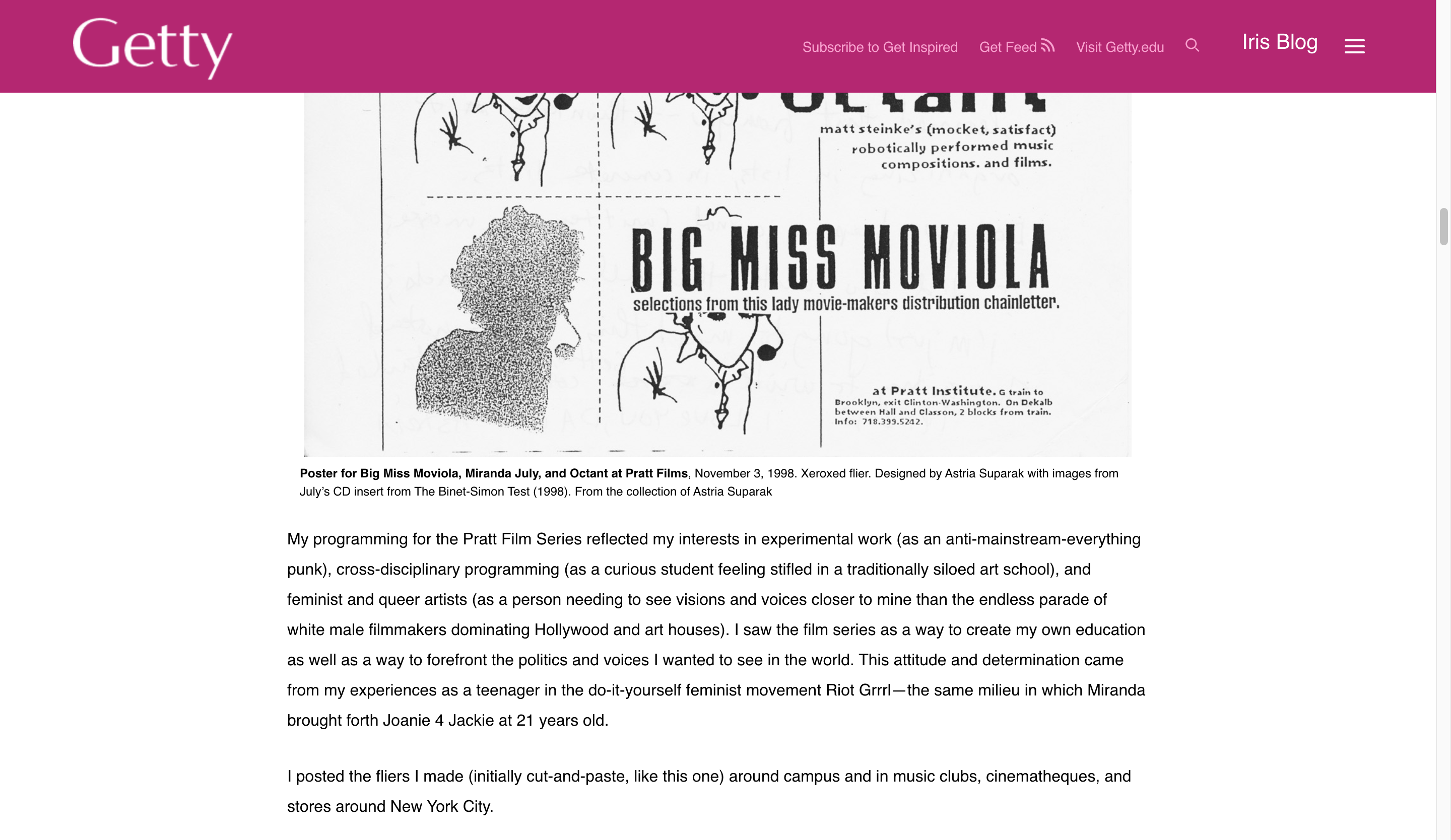
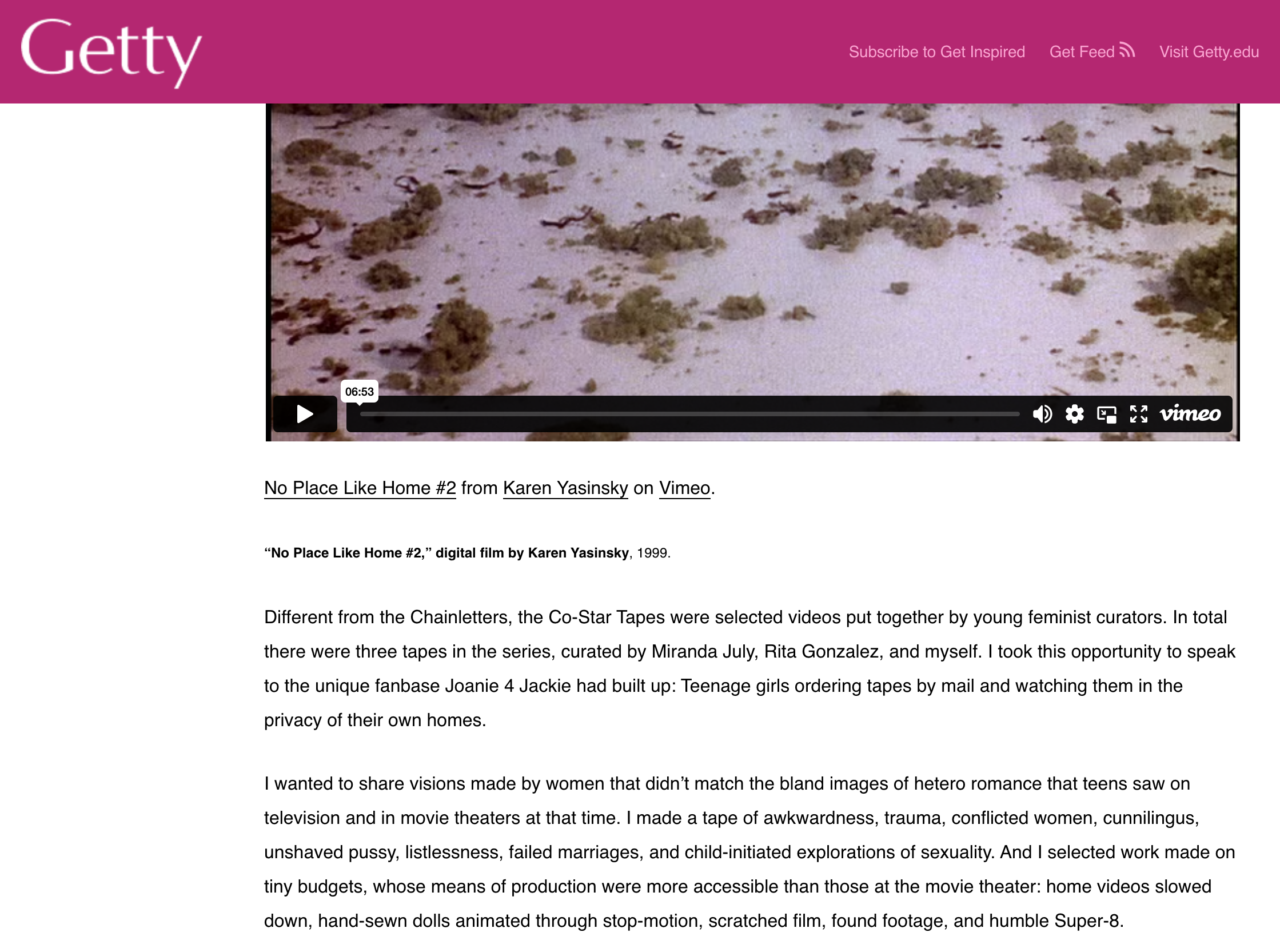
I first encountered Miranda July’s strangely compelling performances in 1995 as part of the short-lived CeBe Barnes Band, at the L.A. Riot Grrrl Convention organized by friends and fellow teen grrrls Sam Dabiri and Leyla Safai. A couple years later I attended a Joanie 4 Jackie (then called Big Miss Moviola) screening at Dumba, a now-defunct queer art collective in a dim warehouse in Brooklyn (see image above). There Miranda encouraged audience members to record themselves with a video camera she set up in the bathroom, completing the sentence, “Nobody ever told me…” (video 1 below).
The evening ended with the private recordings that accumulated over the course of the night projected large, creating a sudden intimacy with the strangers in the room as we shared our secrets and revelations. A few months later I started an experimental film series while an art student at Pratt Institute, and invited Miranda back to New York to present selections from the J4J Chainletter tapes—wild and unpredictable assemblies of woman made movies circulated via post.
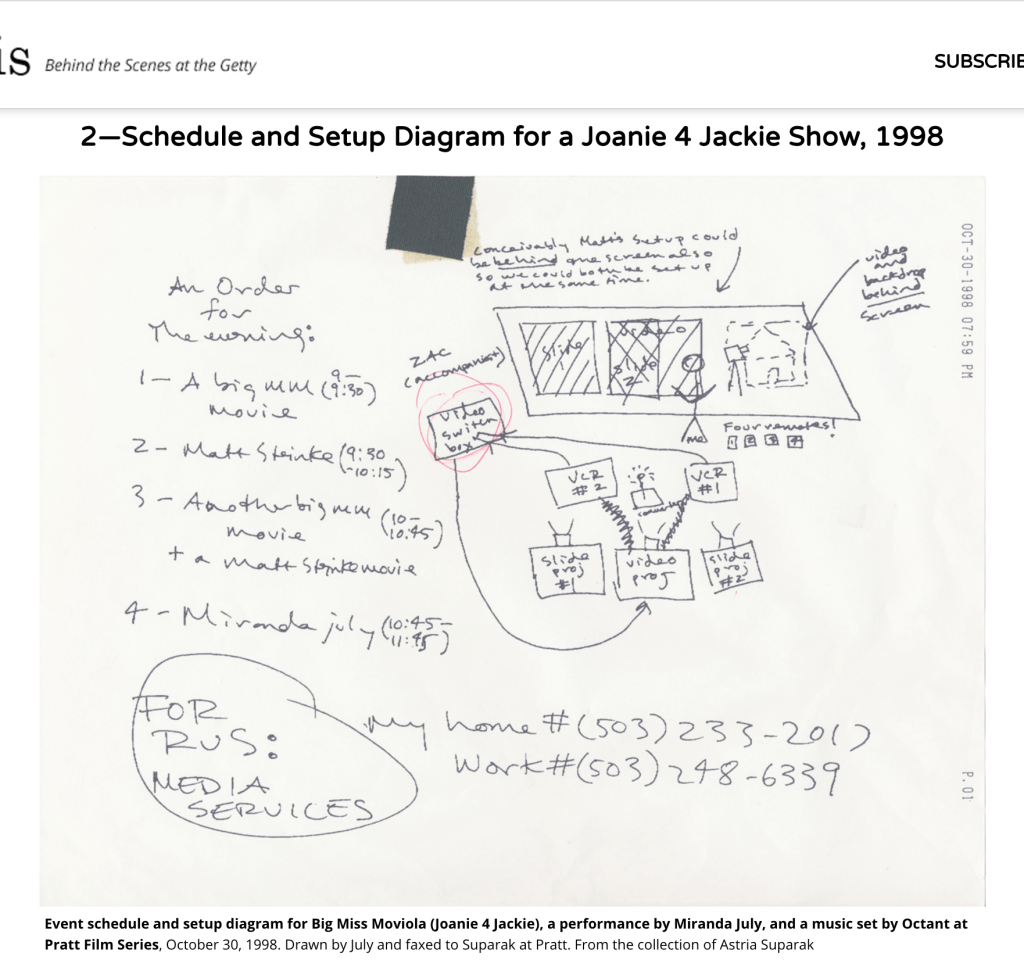
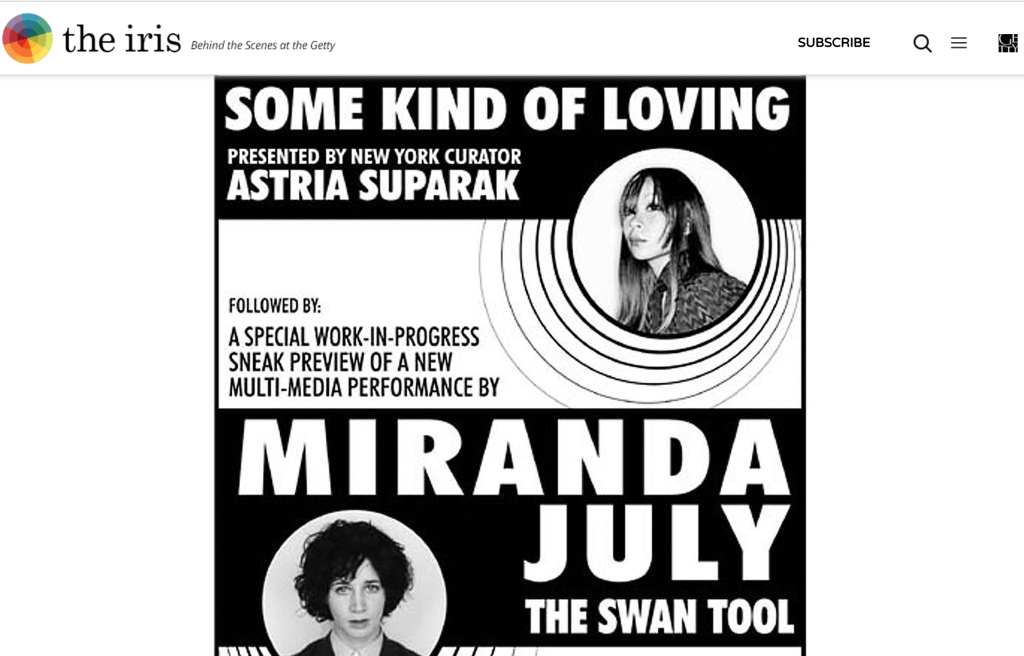
By 2000 we’d done two screenings together (see images 2 and 3 below), both greeted by large and eager audiences, and Miranda asked me to curate a videotape in Joanie 4 Jackie’s new Co-Star Series, following compilations put together by herself and now-LACMA curator Rita Gonzalez. After I graduated, Miranda and I trekked down the West Coast with my Some Kind of Loving program (see image 4 below) and a sketch of her upcoming performance, The Swan Tool, to regional art spaces, microcinemas, festivals, and colleges (see 5, 6, and 7 below).
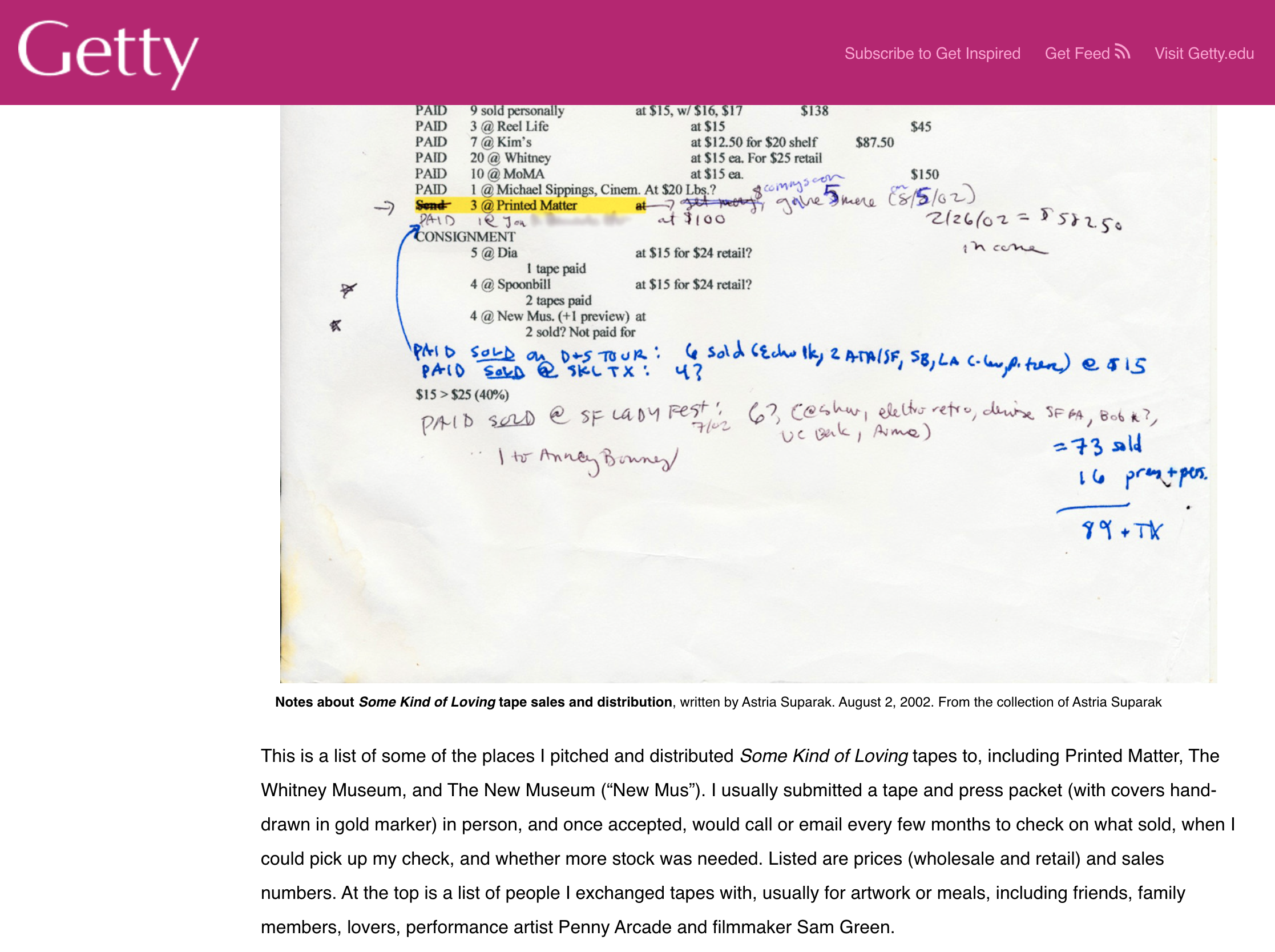
This was my first time touring with another person. When the turnout was meager at a small community space, Miranda cheerfully said backstage, “We’ll still give it our all—it’s like practicing for the next show!” Two days later I had stage fright as hundreds of people waited for me to speak at the grand and balconied Capitol Theater in Olympia. I hustled to get the tape sold on consignment to museum stores, bookstores, and video rental and record stores across New York City (see image 8), as I worked as an independent curator and traveled regularly with other programs of film, video, live music, performance, and mini exhibitions. Years went by, and Miranda passed the Joanie 4 Jackie project on to Bard College to focus on her own feature filmmaking, and I went on to direct gallery spaces.
In 2013 I co-curated an exhibition with Ceci Moss that looked at the impact of the Riot Grrrl movement on cultural producers working today, and featured Miranda July among several artists. Many of the projects in Alien She (see image 9 below) attested to the artists’ long histories of nurturing alternative communities and creating information-sharing networks, such as Joanie 4 Jackie, which was represented by videos, posters, booklets, and personal letters.
At the conclusion of Alien She’s two-year tour we mailed all of the J4J items to the Getty, where Miranda was arranging a donation of the archive. I had kept many of my notes and ephemera from my time with J4J and added them to the collection. In 2016, I started working on the new Joanie 4 Jackie website (begun by Miranda with Vanessa Haroutunian and her fellow Bard students several years earlier), digitizing documents, annotating images, tracking down past participants, creating a timeline of past events, researching details, and organizing the website and materials.
It’s taken a village, and we are thrilled that this labor of love is now being preserved by the Getty Research Institute, accessible to all, and contextualized amongst other important artist and video archives. This project comes out of feminist resistance and grassroots networking—tactics that continue to be valuable and urgent now.
Throughout the last twenty years, my relationship to Joanie 4 Jackie has evolved from spectator to fan, consumer, event programmer, tour booker, distributor, historian, and curator. Below is a selection of artifacts spanning this time, now available along with the complete archive at joanie4jackie.com.
Read full article with annotated images at: https://blogs.getty.edu/iris/behind-the-scenes-and-on-the-stage-with-joanie-4-jackie
Archived link: https://web.archive.org/web/20190503012310/https://blogs.getty.edu/iris/behind-the-scenes-and-on-the-stage-with-joanie-4-jackie/
↑
RELATED WORKS
- Some Kind of Loving video compilation
- Joanie 4 Jackie distribution network
- Pratt Film Series
- Alien She exhibition
- Women Inc. Lexicon
- See other curated film programs & events

