This exhibition explores Riot Grrrl’s global legacy of DIY artistic expression, community-building, and resistance. Presented by Daisy Chain Fields
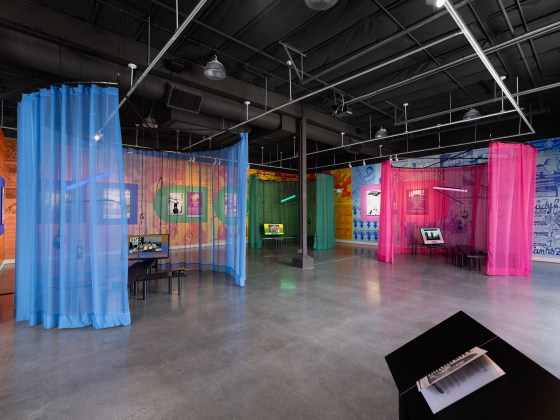
This exhibition explores Riot Grrrl’s global legacy of DIY artistic expression, community-building, and resistance. Presented by Daisy Chain Fields

Upcoming & recent exhibitions, performances, screenings, projects, publications.
(Updated Sept. 2026)
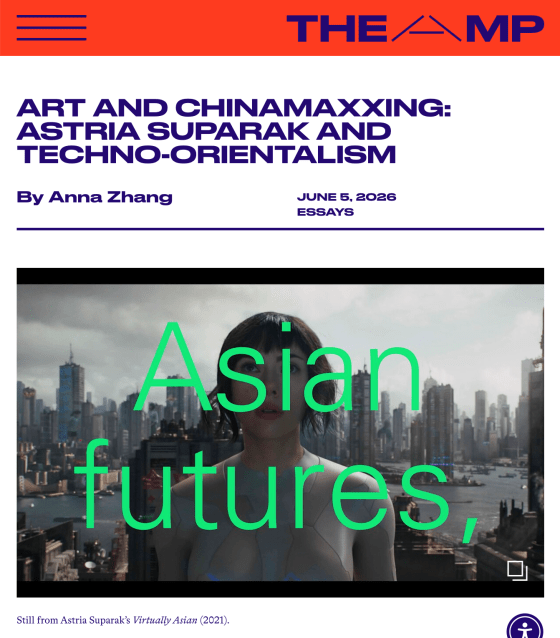
“In her ongoing series ‘Asian Futures’, artist and curator Astria Suparak unpacks this tendency of American media to borrow from Asian culture while simultaneously marginalizing actual Asian people.”
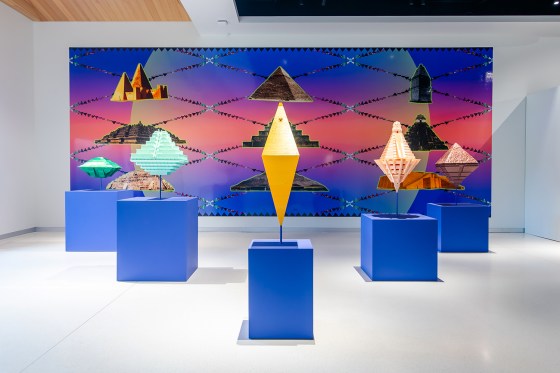
This suite of sculptures and a wall piece draws upon imagery from sci-fi where pyramids signal an alien or futuristic world. Hovering over these fabrications and projections are the real-life pyramids conceived, designed, and built by humans living across ancient Latin America, Africa, and Asia.
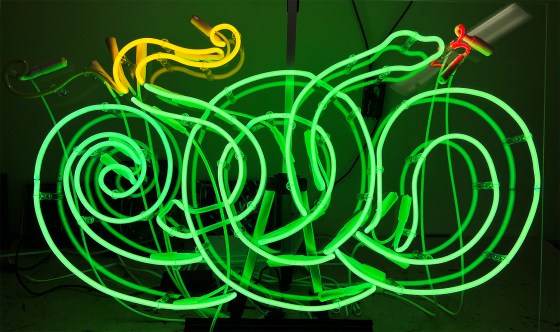
An animated neon snake inspired by an inaccurate and mislabeled 18th-century French naturalist illustration.
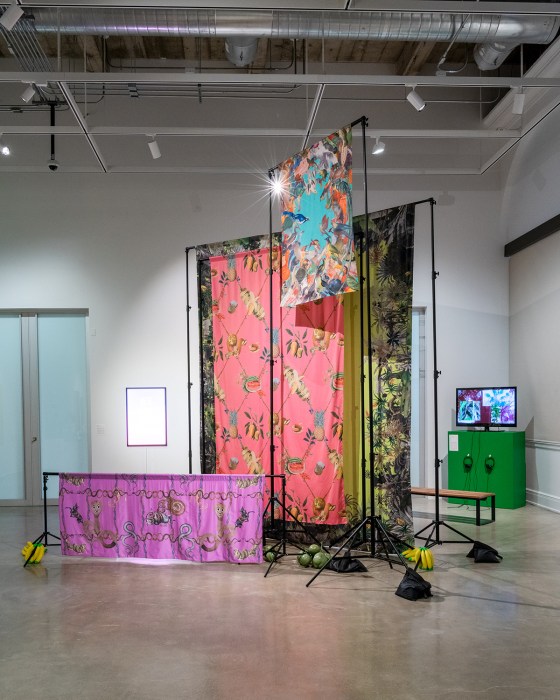
“In this towering installation, Suparak constructs a sprawling set shaped by centuries of imperial fantasy… Snakes coil around prey; a throng of brightly feathered birds erupts into flight above, while fanciful fruits swell into bloated cornucopias.”
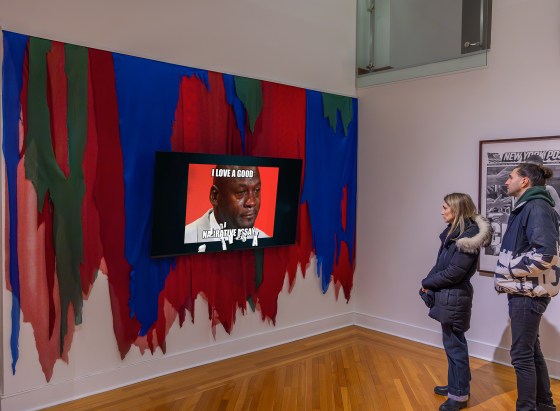
An RGB sports jersey version of a Clyfford Still canvas, looking like ripped remains of an on-court battle.

“I spoke to Suparak about […] how sports and the arts are not mutually exclusive sources of inquiry and criticism of our political and cultural spheres.”

Spanning pre-cinema to post-internet, this six-part screening & performance series at the Walker Art Center challenges the idea that the worlds of sports and art are mutually exclusive.
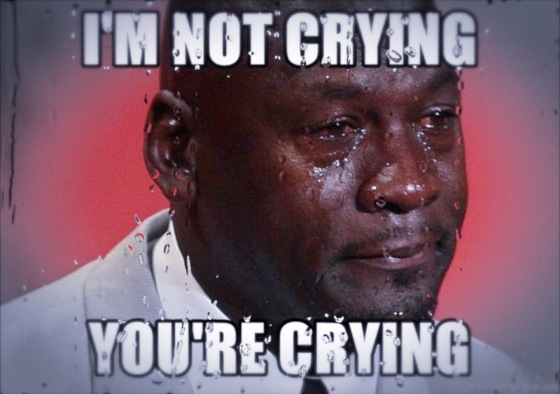
A video spotlighting the range and utility of the long-running Crying Jordan meme, which re-immortalizes one of the 20th century’s most successful athletes into an avatar of failure; an Everyman for disappointment, angst, and sorrow; a tool for rapid responses to live events; and a demonstration of the increased power of (anonymous, decentralized) fan culture.

“The sports film genre—as it has come to be defined through its codes, scholarship, production and screening contexts, and broadcast platforms—is dominated by two typologies: fictive sports films, which often reinforce dominant attitudes and social and cultural stereotypes while distorting or whitewashing history for storytelling purposes; and commercial documentaries, which typically focus on exceptional players, coaches, or teams.”
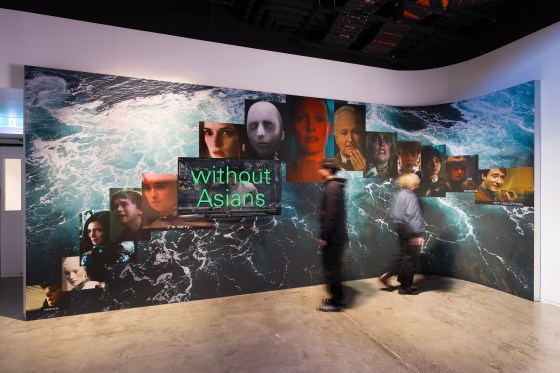
“A collage of Caucasian actors in roles as emotionally complex robots, AIs and cyborgs. [The installation] questions who is granted the privilege of humanity and emotional depth in these techno-futuristic landscapes.”
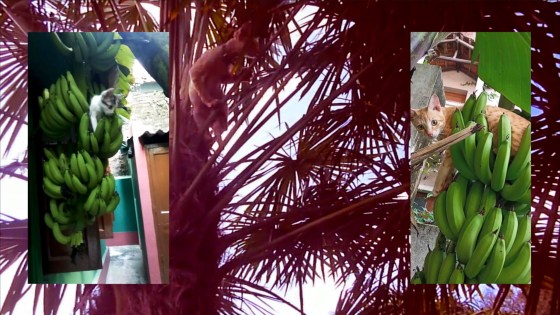
“A sly, sun-soaked detour into cat video territory, refracted through postcolonial critique and pop collage. This winking essay film uses the feline internet genre to unpack tropical aesthetics, exoticism, and identity politics, purring with layered audio, meme logic, and cultural dissection. As playful as it is pointed.”

What may be broadly viewed as benign paintings from dusty art history books point to still-reverberating and repeating histories of colonialism, trade, and sources of European and American wealth through extraction.

Stephanie Syjuco invited nine artists to contribute short essays about their own work with archives to the monograph of her research-based practice, including Pio Abad, Gelare Khoshgozaran, Wendy Red Star, LJ Roberts, Astria Suparak, and Carmen Winant.
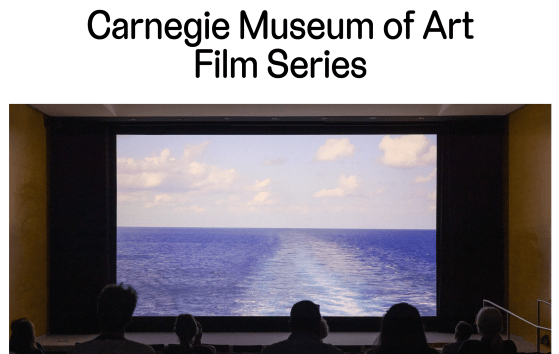
As the guest curator for the Film Series, Suparak crafted 1 year of programs around key ideas present in both the museum collection and her own practice, including science fiction and fantasy, architecture, sports, media criticism, diaspora and inheritance.

“This ground-breaking new history of modern art explores the relationship between art and knowledge from the beginning of the 20th century to the present day.”

