MONDAY considers how technological, economic, and cultural forces shape the ways we produce, share, and experience media — and how that media in turn influences our values and aesthetics.

MONDAY considers how technological, economic, and cultural forces shape the ways we produce, share, and experience media — and how that media in turn influences our values and aesthetics.

“The mute virtual women of the films profiled in Virtually Asian represent a curtailing of the technologically-enhanced female body. The effect of the accumulation of echoing tropes in Virtually Asian – of repeated images of Asian women in traditional dress appearing as immaterial set dressing for white characters – is to emphasize how relentless this process of erasure is.”

“Peggy Ahwesh and Astria Suparak offer inventive perspectives of Western influences on Asian cinema and and Asian influences on Western cinema.” Two-week run at The Walker.

“A video essay by artist Astria Suparak offers a visual critique of sci-fi and speculative fiction films that use Asian cultures as a backdrop and Asian people as props.”

“Asian Futures, Without Asians illuminates the lopsided nature of one Hollywood genre and critiques the way media is concepted to guide audience empathy. Suparak’s [installation] investigates how artificial intelligence is coded in film, and the ways in which sympathetic robots and cyborgs, who are often white, are designed”

Two-week run of “Asian futures, without Asians” at MoMA, NY. Followed by a conversation with Xin Wang and Theodore Lau.

An installation that “compiles stills from films that marshal empathy for AI agents who are coded as white and humanized through their association with whiteness […] Suparak’s media archaeology interrogates imaginaries of AI”
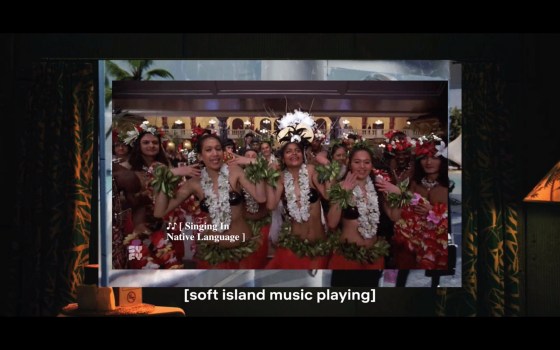
Short looping video that collages footage from 30 years of futuristic sci-fi movies and television shows that employ a fetishized tropics trope.

Published by the Wattis Institute & Sternberg Press, distributed by MIT Press. Newly commissioned texts and an edited selection, taking the work of Trinh T. Minh-ha as its point of departure and driven by the question “What are we learning from artists today?”

Part critical analysis, part reflective essay and sprinkled throughout with humor, justified anger, and informative morsels, this illustrated presentation examines 60 years of American science fiction cinema through the lens of Asian appropriation and whitewashing.

Collage of the Philippine salakót (roughly translates from Tagalog to “native helmet”); how it was worn by Filipinos and Spaniards in the occupying Spanish army; then adapted into the pith helmet, since deployed by every white colonial power.

Visual essay and collage on the history and (sci-fi) future of the ancient Asian technology, the conical hat.
“Astria Suparak’s ‘Virtually Asian’ […] well worth checking out.”

“Countering invisibility is at the heart of a short film by Astria Suparak titled ‘Virtually Asian.’ It splices together scenes from science fiction movies in which urban landscapes are filled with stereotypical ‘Asian’ signifiers, but the actual characters are almost exclusively white.”

“Particularly prevalent are the Asian hologram advertisements that apparently occupy every cityscape in the future, from Blade Runner (1982) to A.I. (2001) to Minority Report (2002), and do we even need to start in on Ghost in the Shell (2017)?”

“Suparak’s piece is immediate and her voice, narrating the words, is melodic and compelling. The over-dubbing of her acerbic observations on blockbuster films is a compelling prelude to other iterations of her work that will appear in fragments across digital platforms.”

Short video essay that looks at how white science fiction filmmakers fill the backgrounds of their futuristic worlds with hollow Asian figures—in the form of video and holographic advertisements—while the main cast (if not the entirety of their fictional universe’s population) is devoid of actual Asian people.

Series of projects, performances, and texts on how white filmmakers envision futures inflected by Asian culture, but devoid of actual Asian people. A visual analysis of 60 years of mainstream science-fiction cinema.
 Astria Suparak