“Pyramid Schemes”
Pyramid Schemes
Astria Suparak
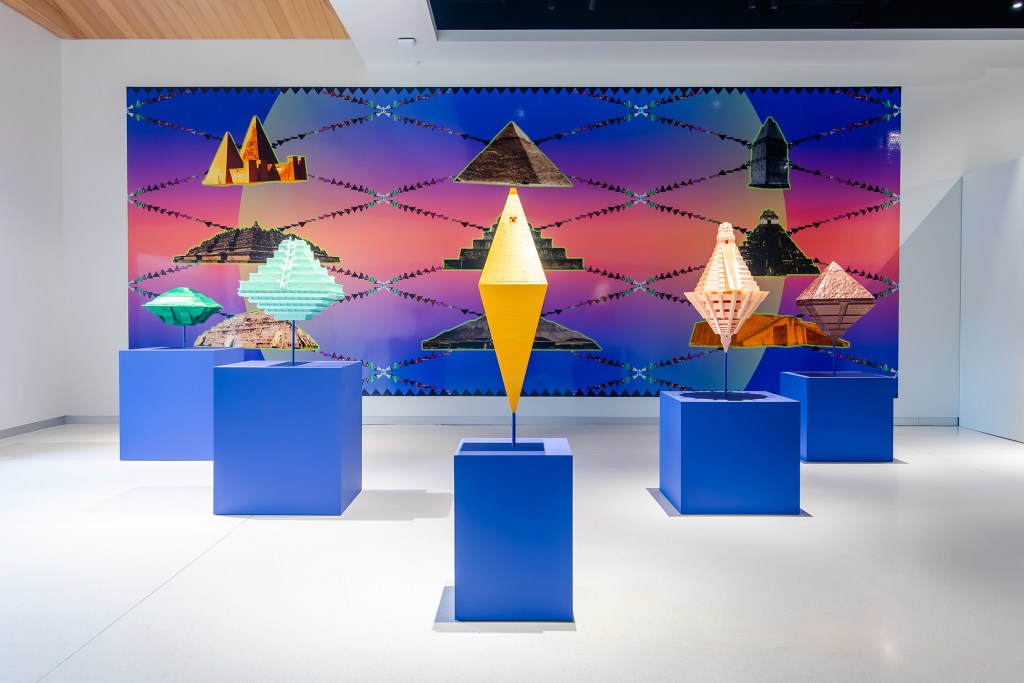
Digital collage on vinyl, 30′ wide x 12′ high
2026
Commissioned by PRAx
Pyramid of the Sun, Mexico (c.100–200 CE) / Blade Runner (1982), 24 x 25.75 x 14.5 inches
Prang Pyramid, Cambodia (928 CE) / Death Race 2000 (1975), 25 x 25 x 23 inches
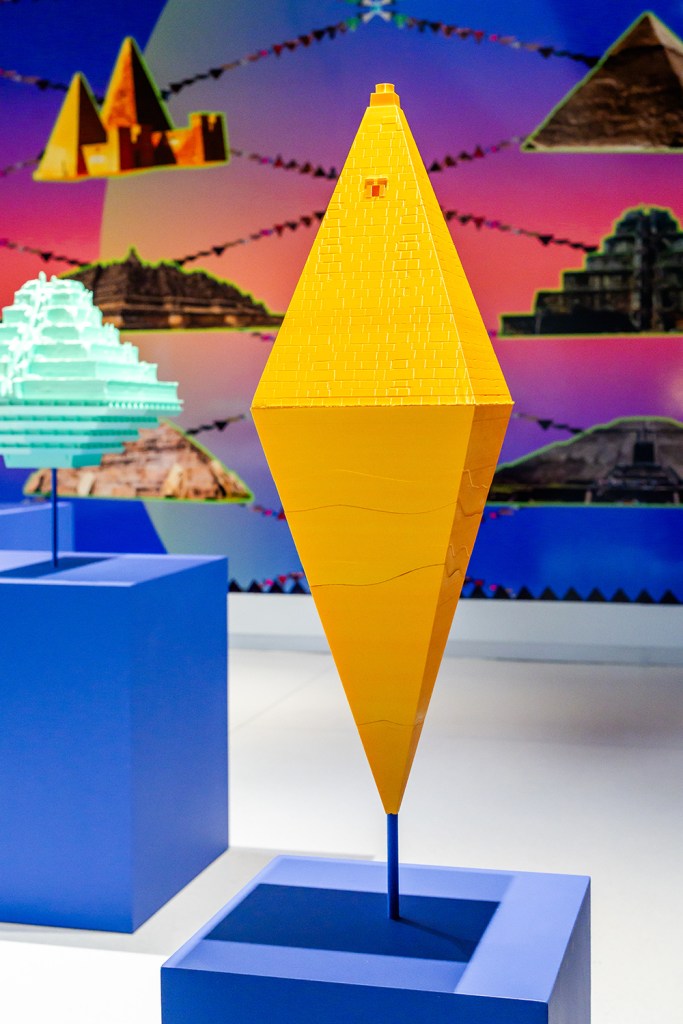
Pyramid of Meroë, Sudan (800 BC–100 CE) / Dune (1984), 24 x 24 x 41.25 inches
Tikal Temple 1 (c. 300–900 CE), Guatemala / Rogue One (2016), 23 x 23 x 37.5 inches
Pyramid of Khafre, Egypt (c. 2550 BC) / Stargate (1994), 22.5 x 22.5 x 30.25 inches
Astria Suparak
Bioplastic sculptures, custom pedestals
2026
Commissioned by PRAx. Fabricated by Derek Easton.
- Description
- Exhibitions
- Quotes
- From the series #AsianFutures
Pyramids are deliberately used to signal an alien or futuristic world in many science-fiction films from the 1950s to the present, which supports and spreads the racist idea that people of color are supposedly not intelligent, creative, or capable of developing monumental architecture and sophisticated technology (the enduring conspiracy theory that “aliens built the pyramids”). Those fabricated pyramids appear diminutive in the Pyramid Schemes wall piece and inverted in the related sculptures.
Hovering over those projections are the real-life pyramids conceived, designed, and built by humans living across ancient Latin America, Africa, and Asia.
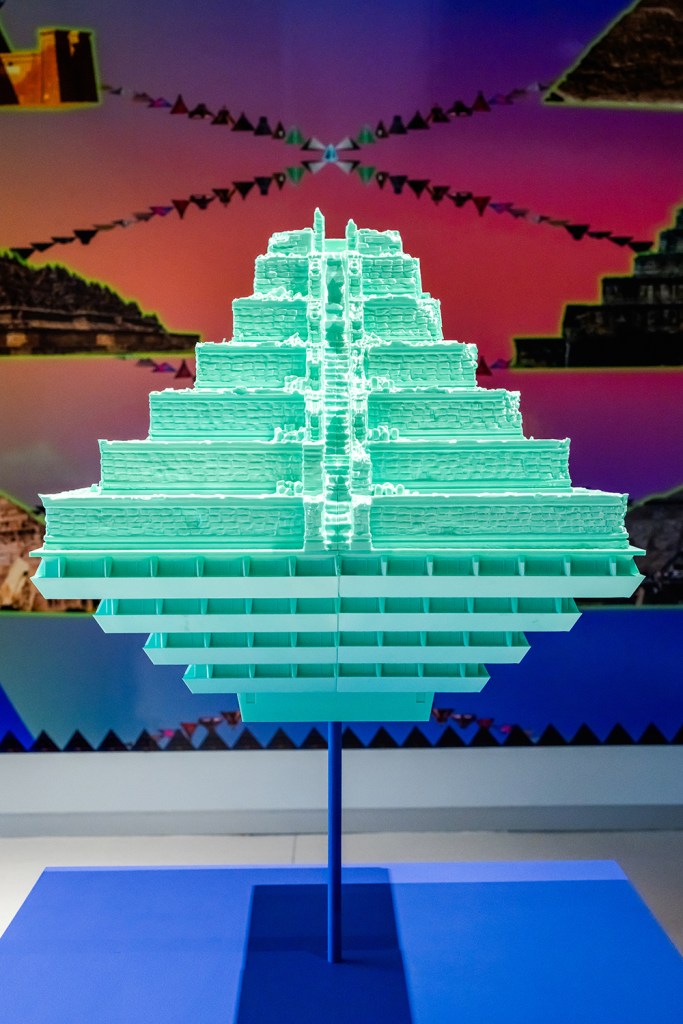
Prang Pyramid, Cambodia (928 CE) / Death Race 2000 (1975)
Bioplastic sculpture, custom pedestal
25 x 25 x 23 inches
2026
The top pyramid is modeled on Prasat Prang, a giant stepped pyramid in northern Cambodia, founded c. 928 CE (Khmer Empire). The inverted pyramid below is the Chet Holifield Federal Building in California, built by a white architect and fan of science fiction, based on historic stepped pyramids (which were built in ancient Latin America, Africa, and Asia).
The federal building was a key setting in the sci-fi film Death Race 2000 and is now home to the U.S. Department of Homeland Security—which is currently targeting for deportation Cambodian Americans, among other groups. Cambodian Americans arrived to the U.S. as refugees and as a direct result of U.S. intervention in their home country.
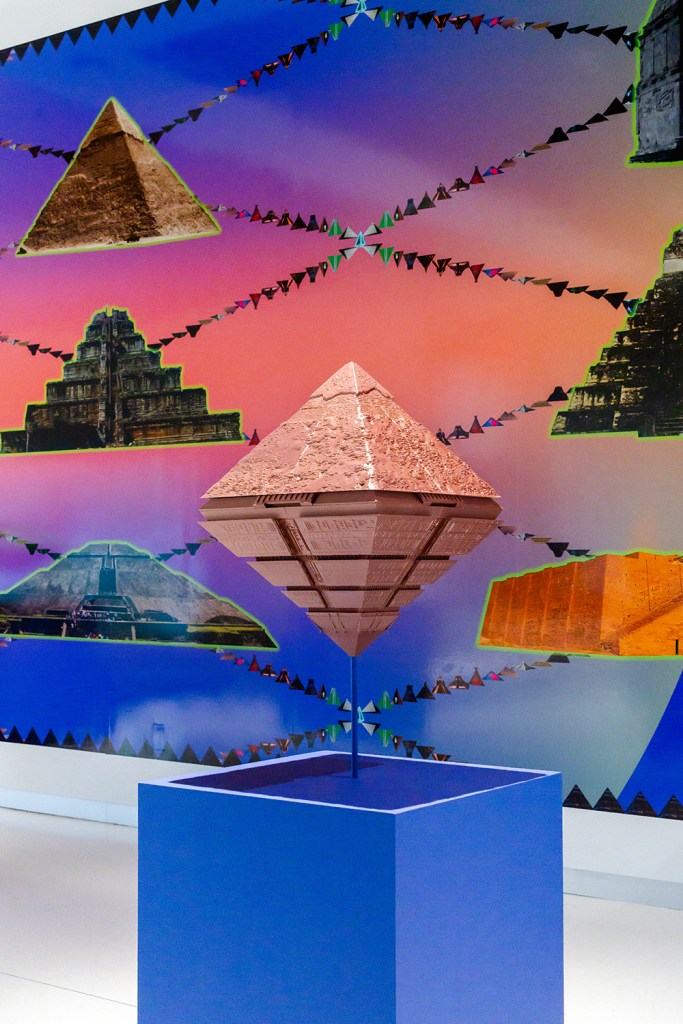
Pyramid of Khafre, Egypt (c. 2550 BC) / Stargate (1994)
Bioplastic sculpture, custom pedestal
22.5 x 22.5 x 30.25 inches
2026
The top half of the sculpture is a replica of the iconic Pyramid of Khafre in Giza, Egypt, which was built by compensated skilled workers—not by slaves, which is a myth propagated by Hollywood. The pyramid below is featured in the 1990s blockbuster film Stargate, whose premise is that a magical alien enslaved ancient Egyptians and is the true mastermind behind the architectural marvels. Stargate is just one of many media productions and conspiracy theories that strip the Global South of the genius, creativity, and advanced skills (including mathematical, scientific, and architectural) of their heritage.
EXHIBITION
Patricia Valian Reser Center for the Creative Arts (PRAx), Oregon State University
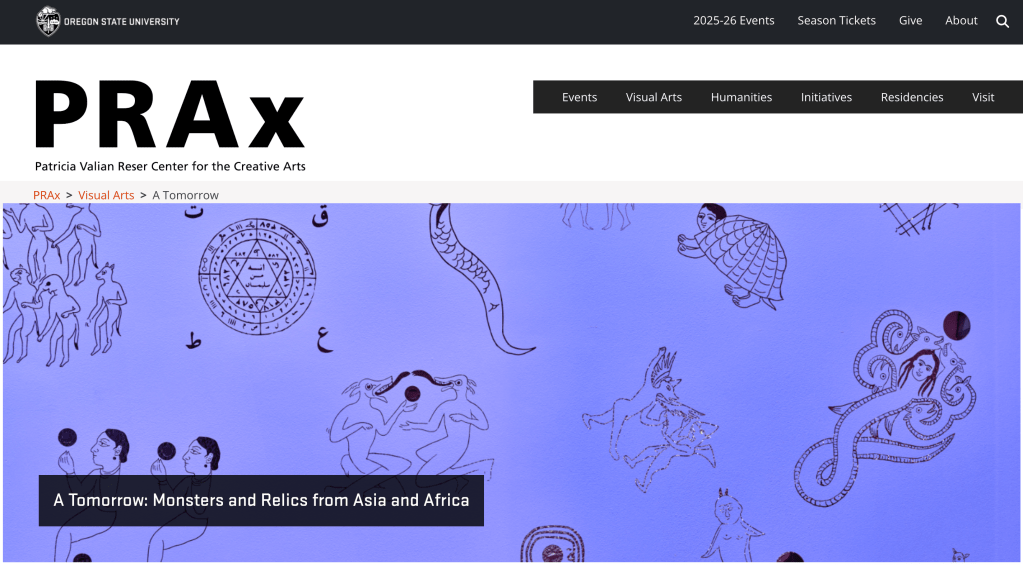
A Tomorrow: Monsters and Relics from Asia and Africa
Curated by Ashley Stull Meyers
March 31–June 13, 2026
- Audio Tour: Led by the curator with each artist talking about their work
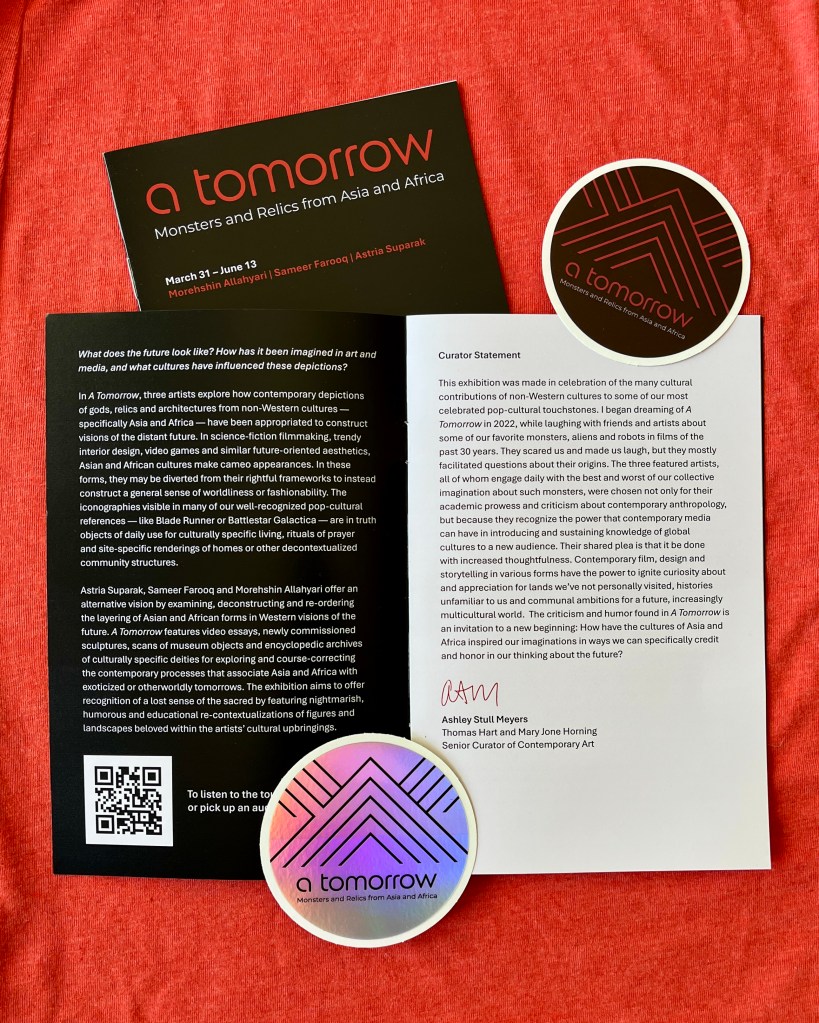
In A Tomorrow, three artists explore how contemporary depictions of gods, relics, and architectures from non-Western cultures — specifically Asia and Africa — have been appropriated to construct visions of the future. In science-fiction filmmaking, trendy interior design, video games, and similar future-oriented aesthetics, Asian and African cultures make cameo appearances. In these forms, they may be diverted from their rightful frameworks to instead construct a general sense of worldliness or fashionability.
Artists Astria Suparak, Sameer Farooq, and Morehshin Allahyari offer an alternative vision by examining, deconstructing and re-ordering the layering of Asian and African forms in Western visions of the future. A Tomorrow features video essays, newly commissioned sculptures, scans of museum objects and encyclopedic archives of culturally specific deities for exploring and course-correcting the contemporary processes that associate Asia and Africa with exoticized or otherworldly tomorrows. The exhibition aims to offer recognition of a lost sense of the sacred by featuring nightmarish, humorous and educational re-contextualizations of figures and landscapes beloved within the artists’ cultural upbringings.
“The three featured artists [Astria Suparak, Sameer Farooq, and Morehshin Allahyari], all of whom engage daily with the best and worst of our collective imagination about such monsters, were chosen not only for their academic prowess and criticism about contemporary anthropology, but because they recognize the power that contemporary media can have in introducing and sustaining knowledge of global cultures to a new audience. Their shared plea is that it be done with increased thoughtfulness. Contemporary film, design and storytelling in various forms have the power to ignite curiosity about and appreciation for lands we’ve not personally visited, histories unfamiliar to us and communal ambitions for a future, increasingly multicultural world. The criticism and humor found in A Tomorrow is an invitation to a new beginning: How have the cultures of Asia and Africa inspired our imaginations in ways we can specifically credit and honor in our thinking about the future?”
— Ashley Stull Meyers, from the “A Tomorrow” Curator Statement
QUOTES
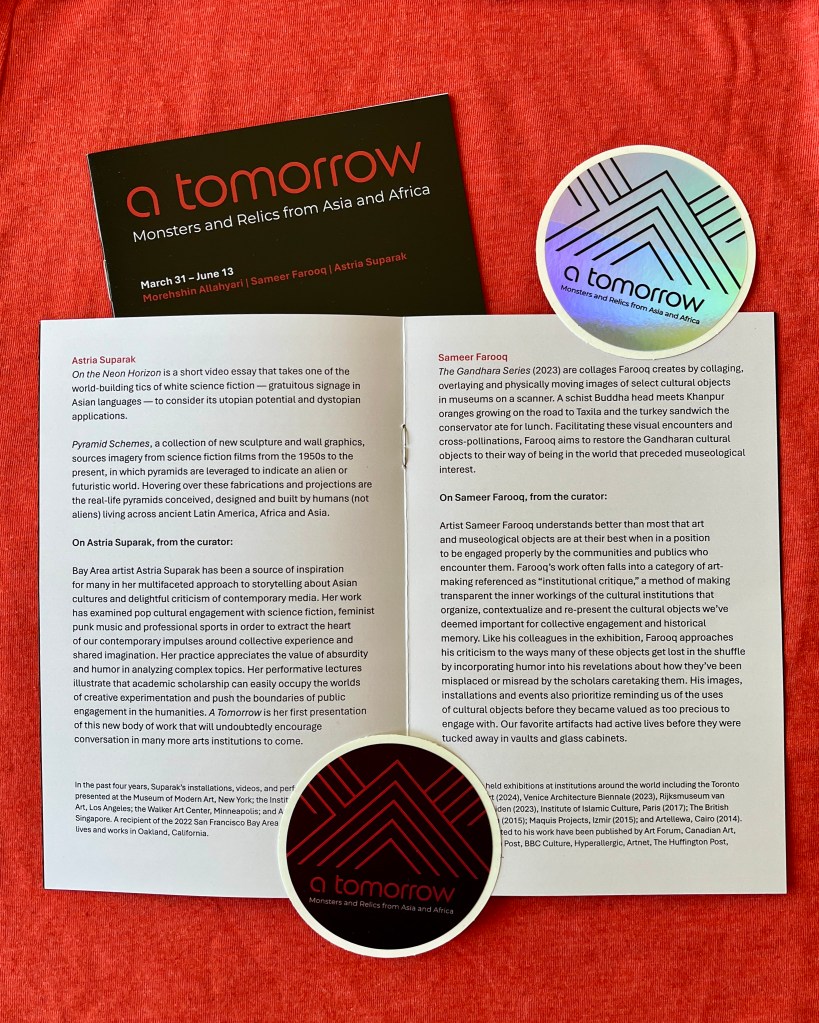
“Bay Area artist Astria Suparak has been a source of inspiration for many in her multifaceted approach to storytelling about Asian cultures and delightful criticism of contemporary media.
Her work has examined pop cultural engagement with science fiction, feminist punk music and professional sports in order to extract the heart of our contemporary impulses around collective experience and shared imagination. Her practice appreciates the value of absurdity and humor in analyzing complex topics. Her performative lectures illustrate that academic scholarship can easily occupy the worlds of creative experimentation and push the boundaries of public engagement in the humanities. ‘A Tomorrow’ is her first presentation of this new body of work [Pyramid Schemes] that will undoubtedly encourage conversation in many more arts institutions to come.”
— Ashley Stull Meyers, “A Tomorrow” booklet
RELATED WORKS
- Finite Horizon installation
- “We, the Aliens of the Future” essay
- Asian futures, without Asians performance
- Welcome to the Taro Dome installation
- Tropical Cats video
- Ancient Sci-Fi backdrops
- Other #AsianFutures works
- #Tropicsss works

