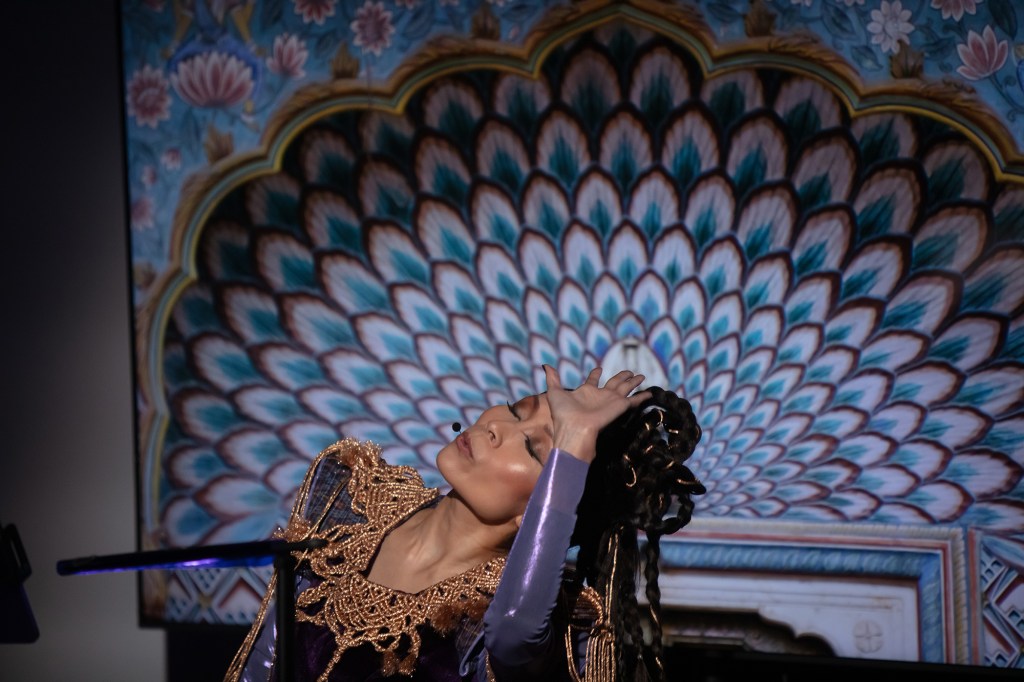
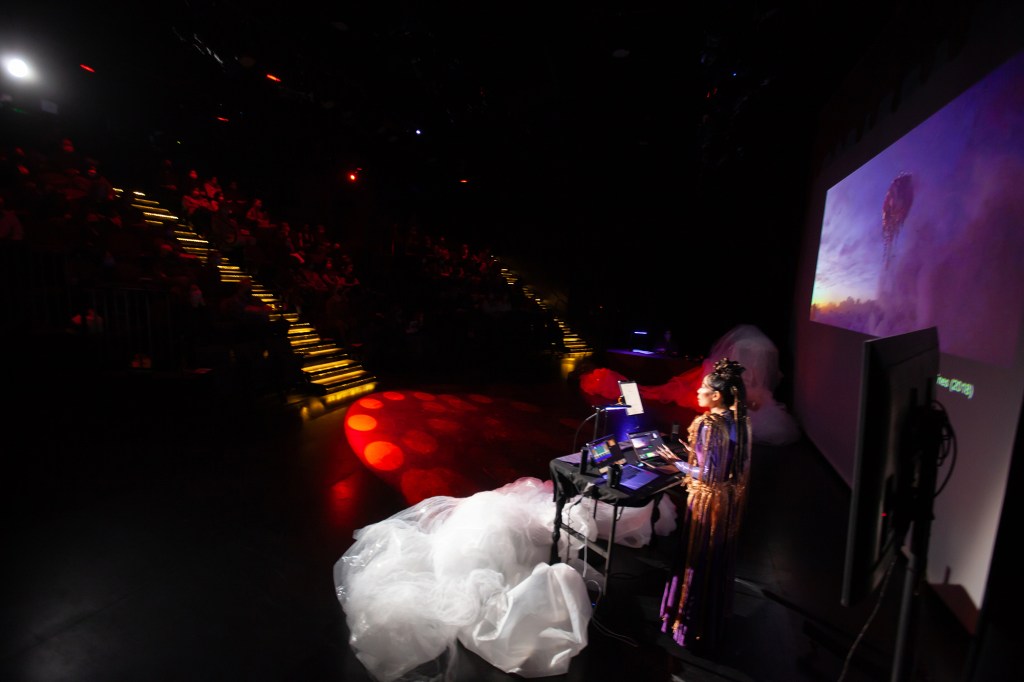
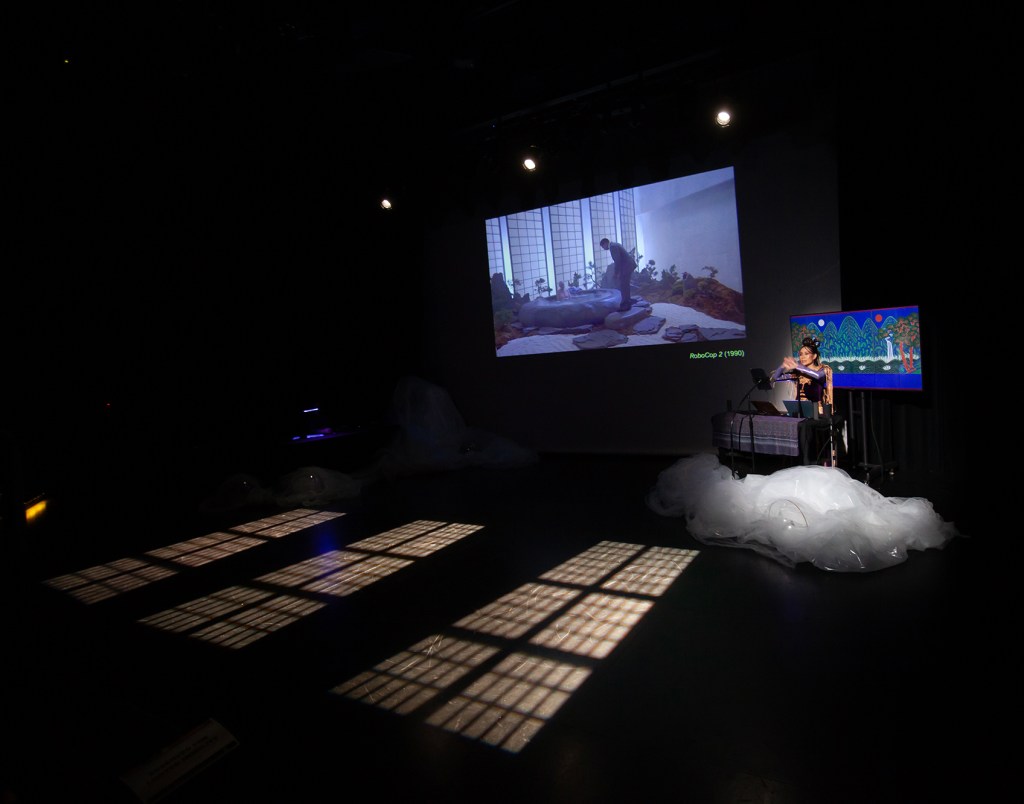
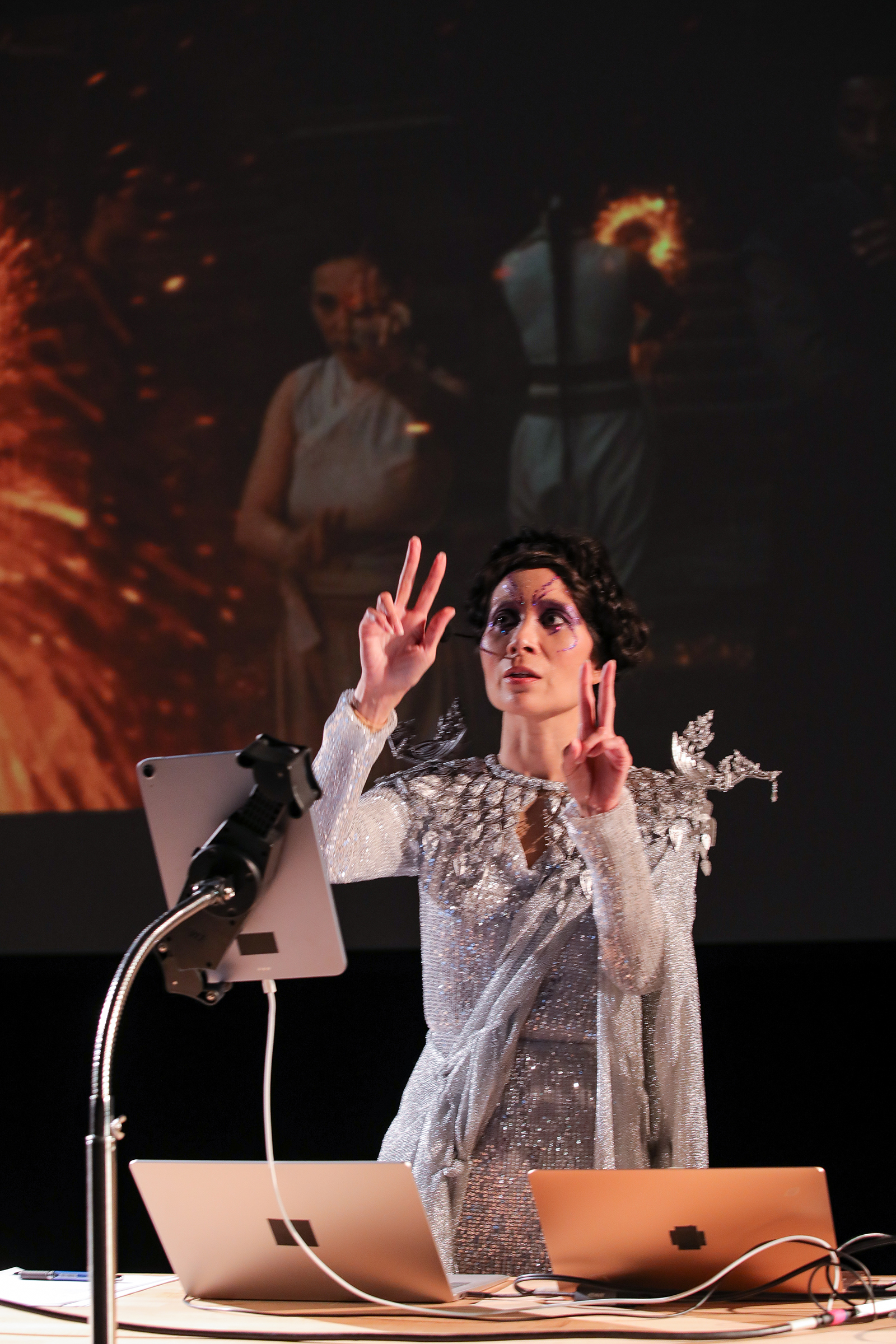

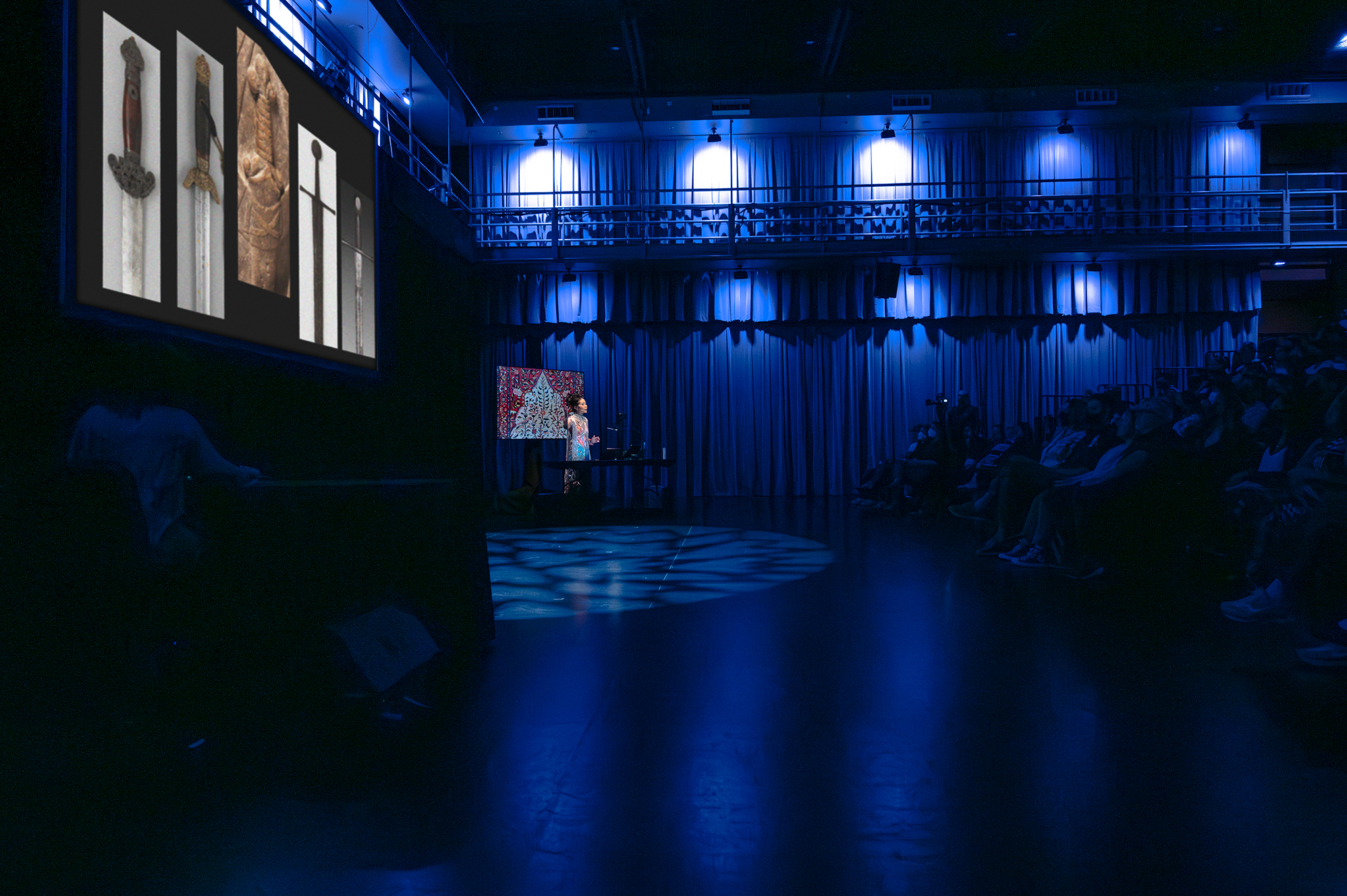
“Asian futures, without Asians” multimedia performance
Astria Suparak
Live multimedia performance (slides, video, live music, custom lighting), 60 minutes
2023—Present — Currently touring
https://bit.ly/afwa-performance
- Description
- Performances
- Preview
- Publication
- Press & Quotes
- Collections
- From the Asian Futures series. See other #scifi works.
What does it mean when so many white filmmakers envision futures inflected by Asian culture, but devoid of actual Asian people? This is the animating question of Asian futures, without Asians, a multimedia performance by artist Astria Suparak.
Surveying 60 years of mainstream science-fiction cinema, this incisive, poetic, yet accessible work oscillates between humor and gravity. Suparak begins by breaking down the unstable category of “Asian” through a series of maps, regulations, and geopolitical trends — inclusive of East, Southeast, South, West, and Central Asia, as well as North Africa and the Pacific Islands. She draws connections between discriminatory rhetoric and historical legislation with present day anti-Asian and anti-Arab racism, detailing how they intersect with gender, class, and sexuality. In doing so, she reveals deeply embedded prejudices that have become normalized in contemporary visual culture.
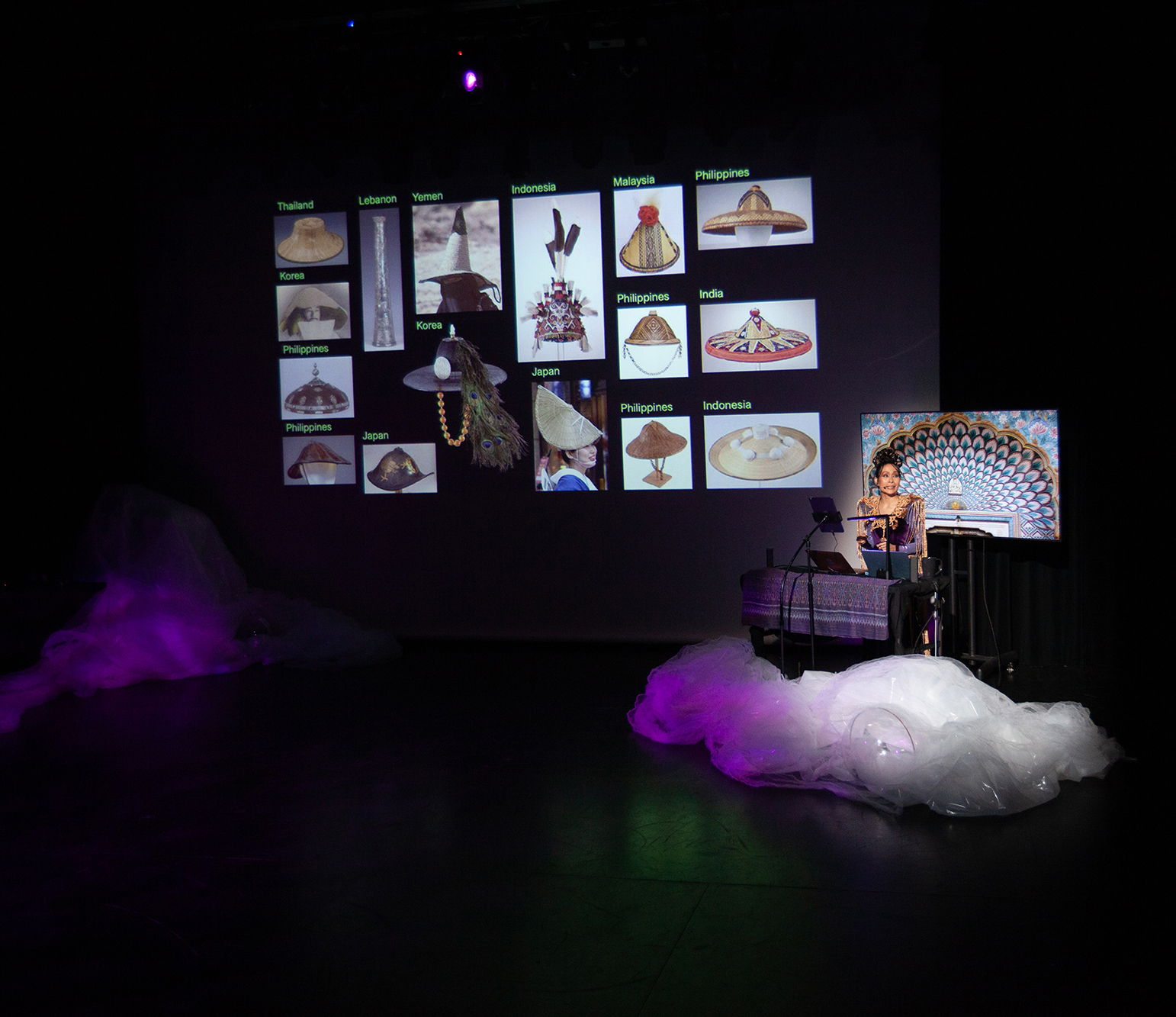
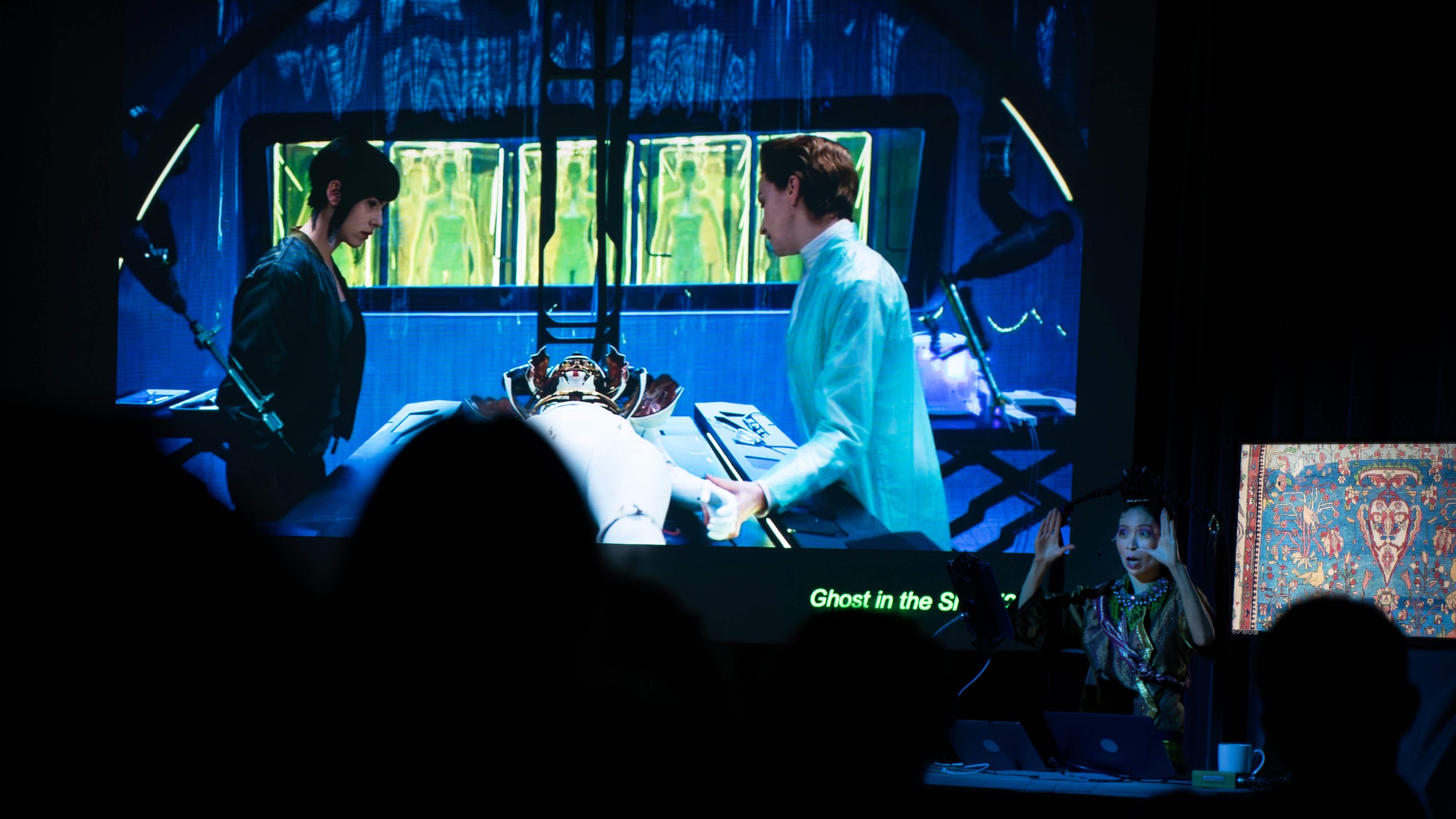
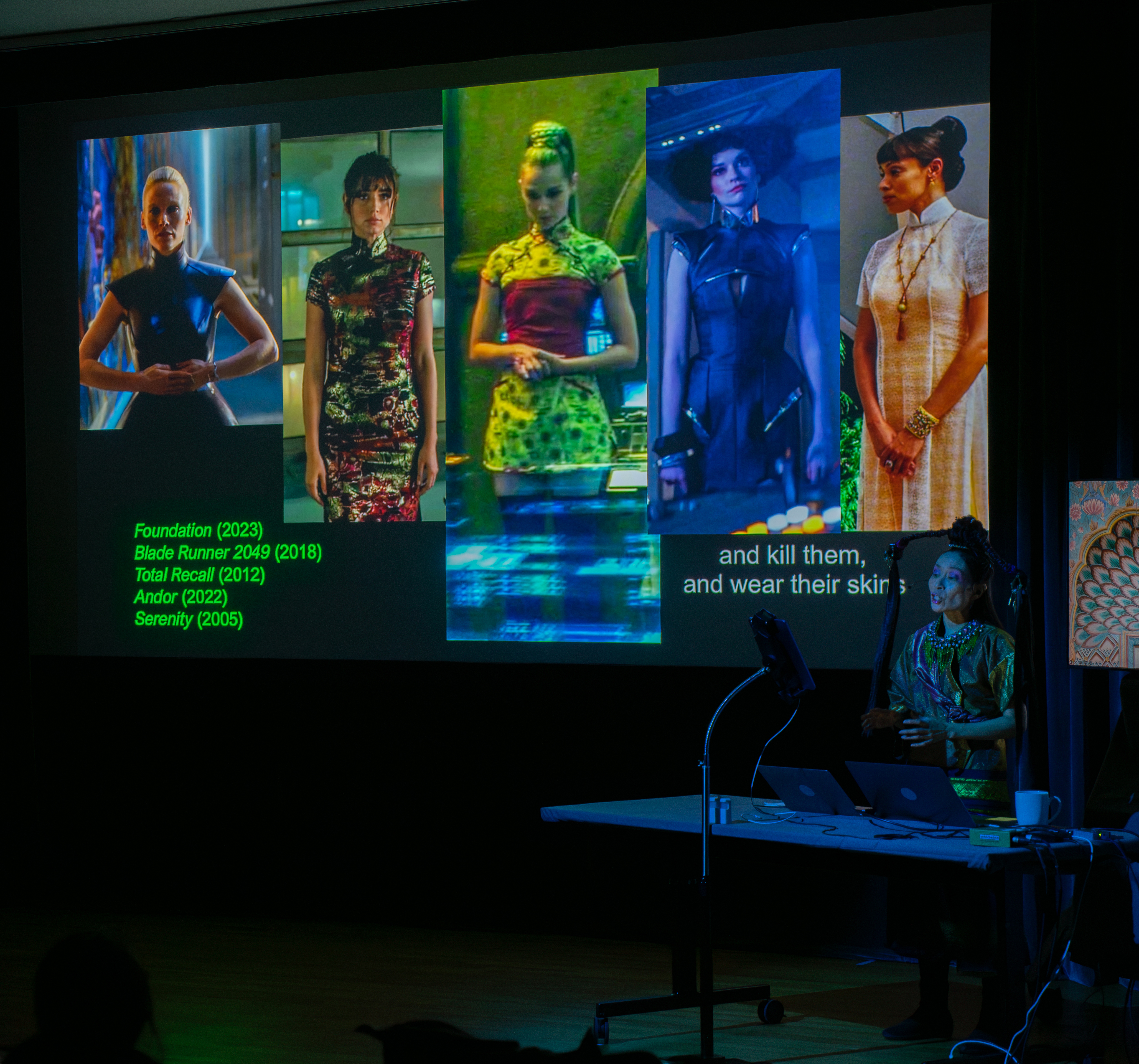
This live cinema work, presented as a taxonomy of tropes, is illustrated with over 400 images and clips from futuristic movies and television shows. Accompanied by a live musical soundtrack, Suparak delivers anecdotes, trivia, and documents (including photographs, advertisements, and cultural artifacts) from the histories of art, architecture, design, fashion, film, religion, and science. The implications of appropriating, decontextualizing, and misrepresenting Asian cultures while excluding Asian contributors are laid bare.
The first iteration of Asian futures, without Asians was an online performance lecture commissioned by The Wattis Institute for Contemporary Arts, San Francisco. The project has developed over a series of live performances made for the Zoom camera and for in-person, with script, imagery, costuming, and backdrops tailored to each arts institution and country in which it is presented and reflecting current news events.
↑
PERFORMANCES
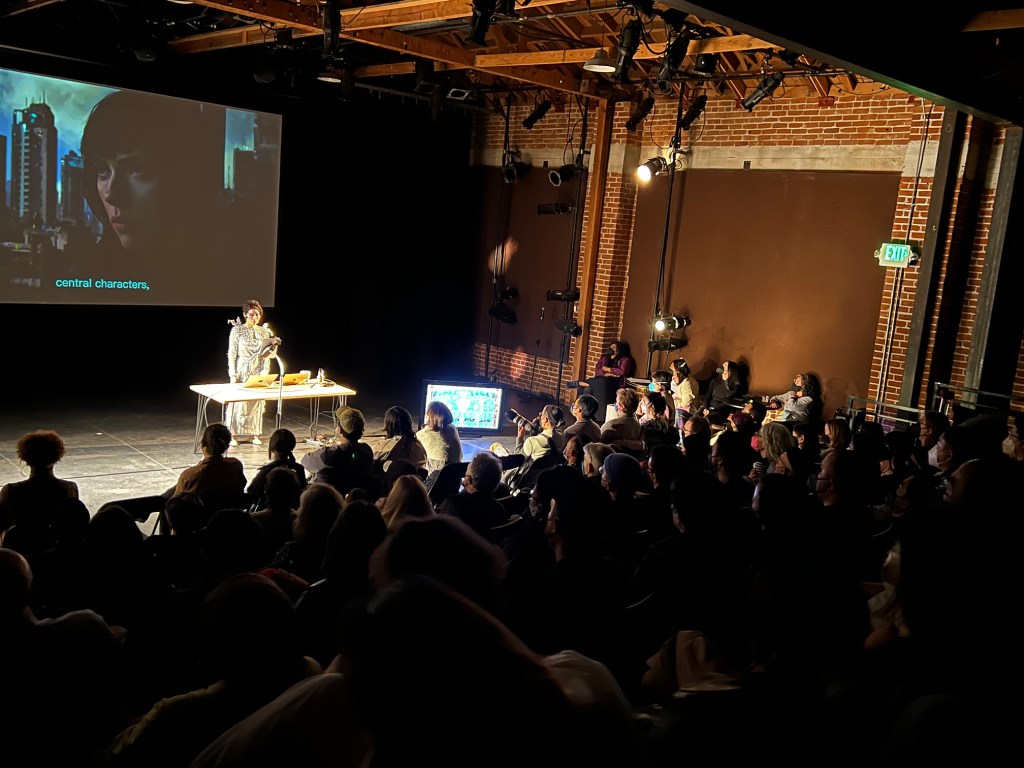
June 1, 2023
2220 Arts + Archives, Los Angeles, CA
Organized by X-TRA Contemporary Art Journal
Musical accompaniment: Paige Emery
Costume: Linda Queenie Lieu
Makeup: Star Tsai
Hair: Arbana Dollani
Post-performance conversation with: Anuradha Vikram
Outdoor area available for drinks before and after the performance. Purchase tickets here.
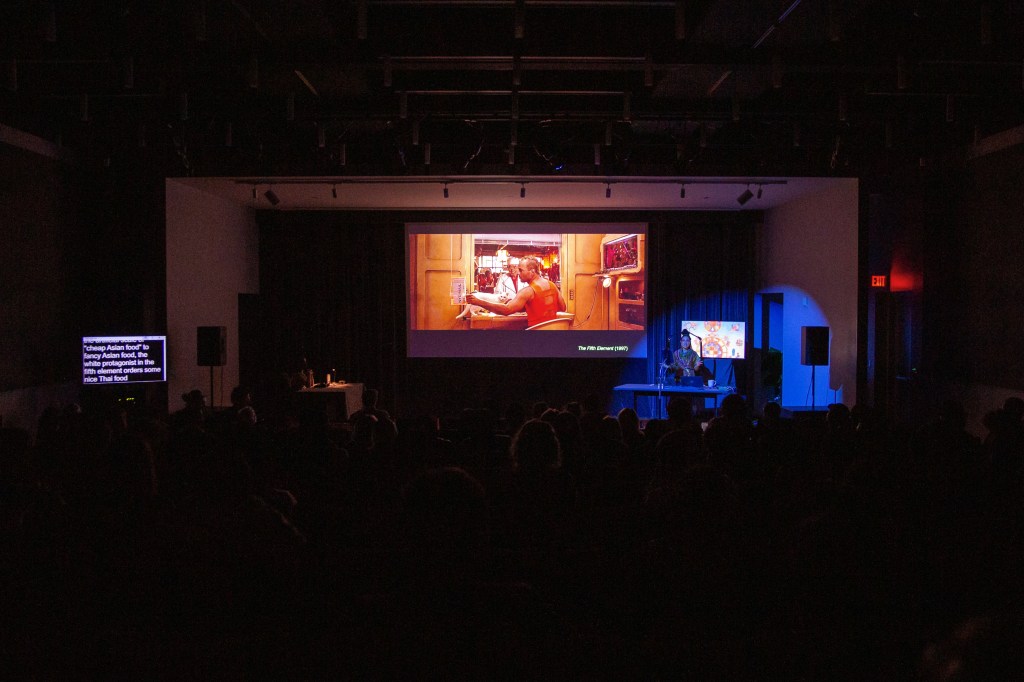
Nov. 15, 2023, 6pm EST
University of Michigan Museum of Art, Helmut Stern Auditorium, Ann Arbor, MI
Musical accompaniment: Tammy Lakkis
Costume: Levon Kafafian
Makeup & Hair: Jay Orellana
Post-performance conversation with: Tung-Hui Hu
This event is part of the inaugural season of the Digital Studies Institute and the DISCO Network [Digital Inquiry, Speculation, Collaboration, and Optimism Network] series Search Engines: Art, Tech, Justice. Co-Sponsors: Asian/Pacific Islander American Studies Program; Center for Ethics, Society, and Computing; Center for Southeast Asian Studies; Department of American Culture; Department of Asian Languages and Culture; Nam Center for Korean Studies; Stamps School of Art and Design.
Covid precautions: Attendees requested to wear well-fitting masks and stay home if they are not feeling well. Free masks will be available for those who need them. Space will have good air filtration and HEPA air filters. Free. Register.

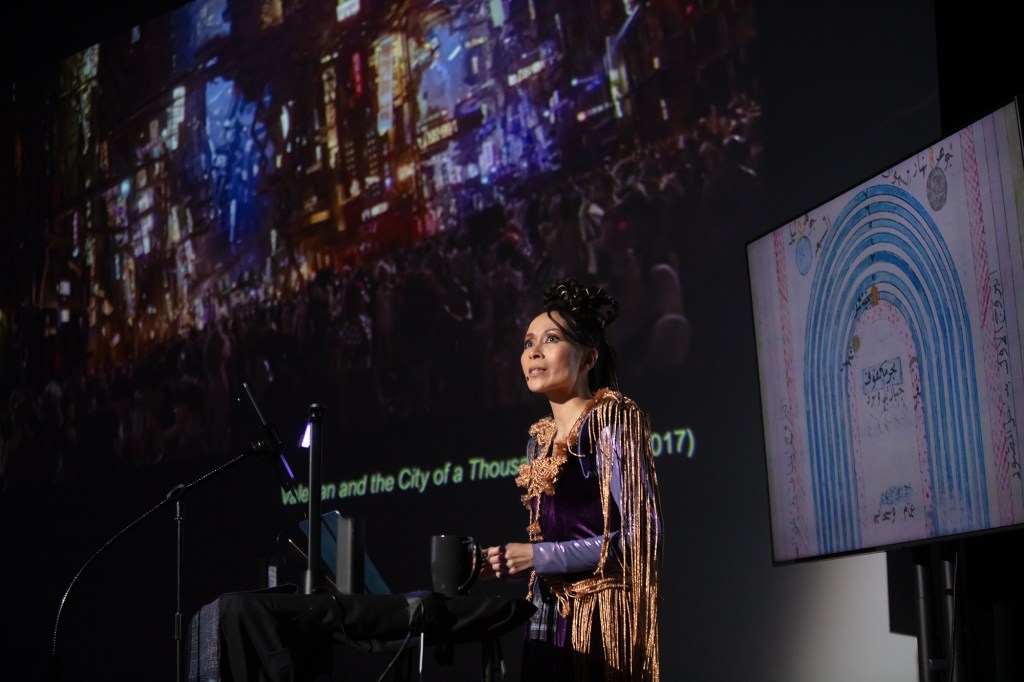
Oct. 24, 2024, 7:30pm PST
Mondavi Center for the Performing Arts, Davis, CA
Musical accompaniment: Tammy Lakkis
Costume: Stephanie Gancayco
Makeup & Hair: Carla Grace Fajardo
Post-performance conversation with: Mark Jerng
This event is part of the Stars, Earth, and Coral: Pacific Entanglements and Futures Beyond the Human symposium and sponsored by UC Davis Asian American Studies, Mellon Foundation Affirming Multivocal Humanities Grant, and the Mondavi Center for the Performing Arts.
Health precautions: The artist requests that attendees wear well-fitting masks in the theater and stay home if they are not feeling well. Free masks will be available. Space has good air filtration (ACH 6 to 8) and will have HEPA air purifiers for the event. Purchase tickets here.
March 11, 5:00pm + March 12, 7:00pm, 2026
Play Circle Theater, University of Wisconsin-Madison, WI
Musical accompaniment: Tammy Lakkis
Costume: Aly Renee Amidei
Makeup & Hair: Nola Kahn
Lighting Design: Jove Stueber
Scenic Design: Aly Renee Amidei & Xiner Wu
Post-performance panel with: Preeti Chopra (Visual Studies, South Asian Art & Architecture), Derek Johnson (Media & Cultural Studies, Film), and Nam Kim (Anthropology), moderated by Helen Lee (Glass Lab, Art Department)
Organized by Helen Lee. Co-sponsored by Anonymous Fund, Division of the Arts, University Lectures, Theater and Drama, Center for Southeast Asian Studies, Communication Arts, Nancy M. Bruce Center for Design and Material Culture, Interdisciplinary Theater Studies, Art Department, Center for Visual Culture & Performance Studies, Asian American Studies Program, Art History. Also supported by a Brittingham Wisconsin Trust Grant, and part of the UW Art Visiting Artist Colloquium and the Center for Visual Culture and Performance Studies’ program, Performing Populisms and Fascinating Fascisms.
Health precautions: The artist requests that attendees wear well-fitting masks in the theater and stay home if they are not feeling well. Free masks will be available. Space will have air purifiers for the event.
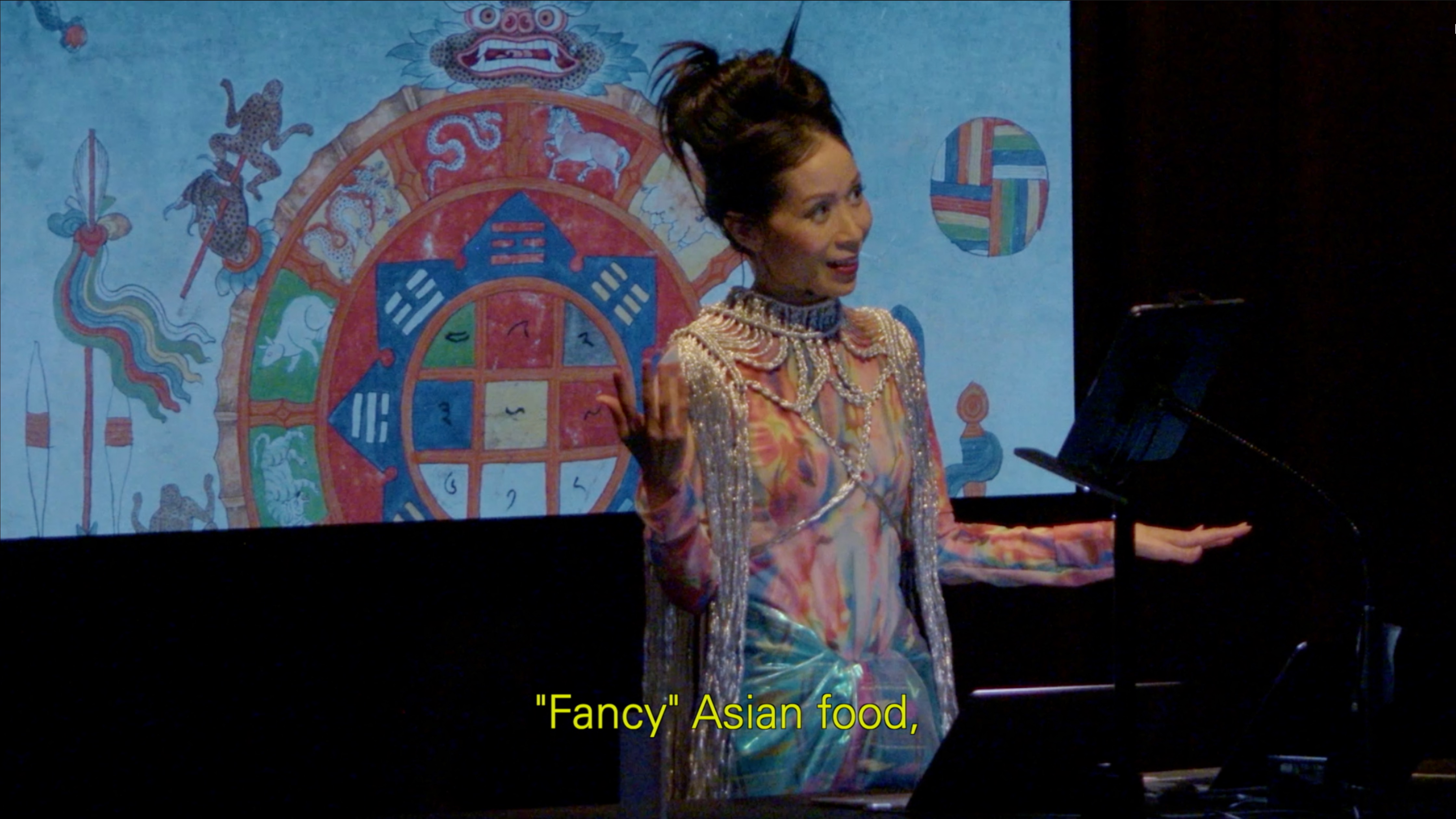
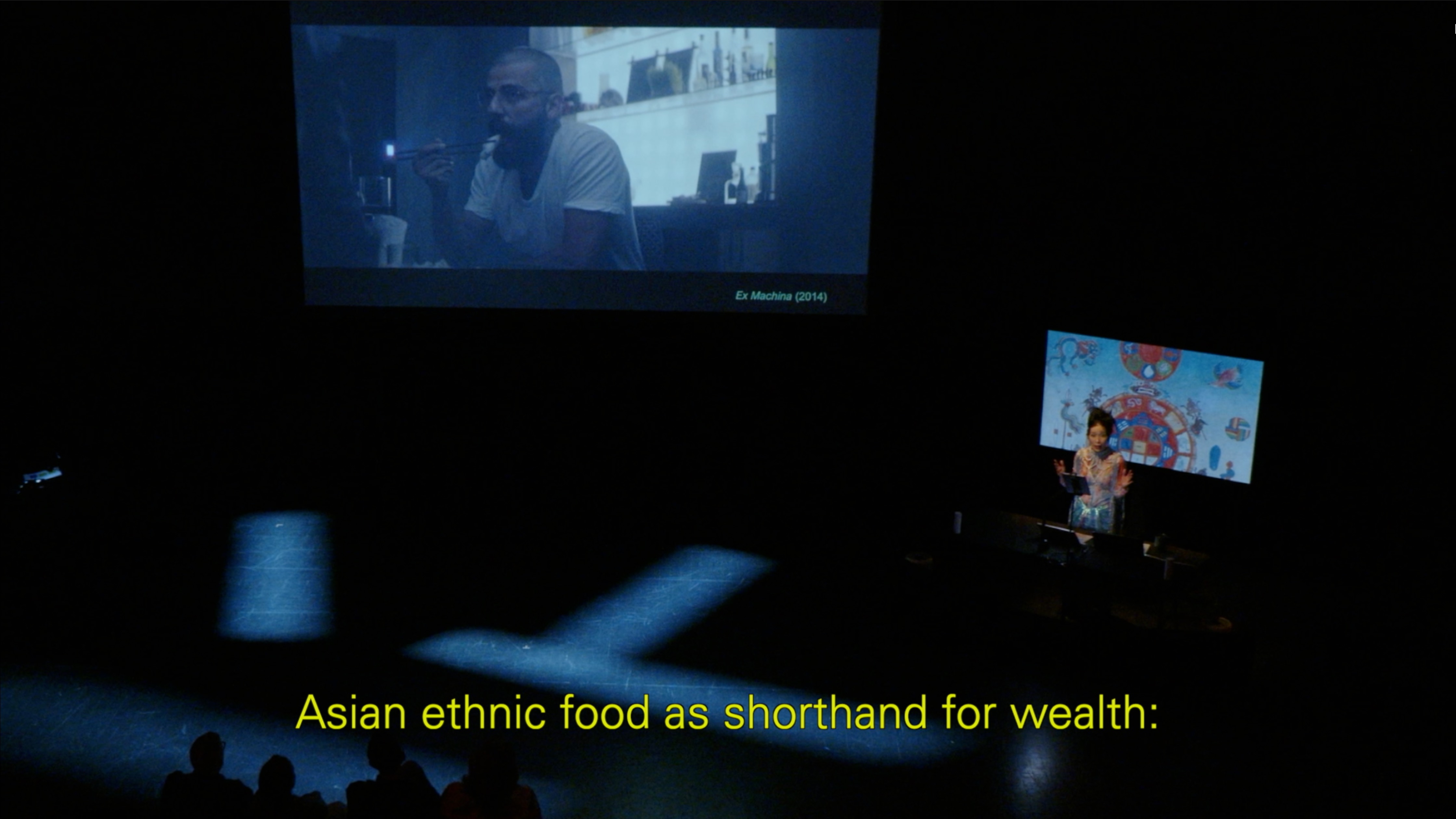
See details about the earlier, online version of the performance here.
↑
PREVIEW
Previews from the earlier, online version of the performance.
↑
PUBLICATION

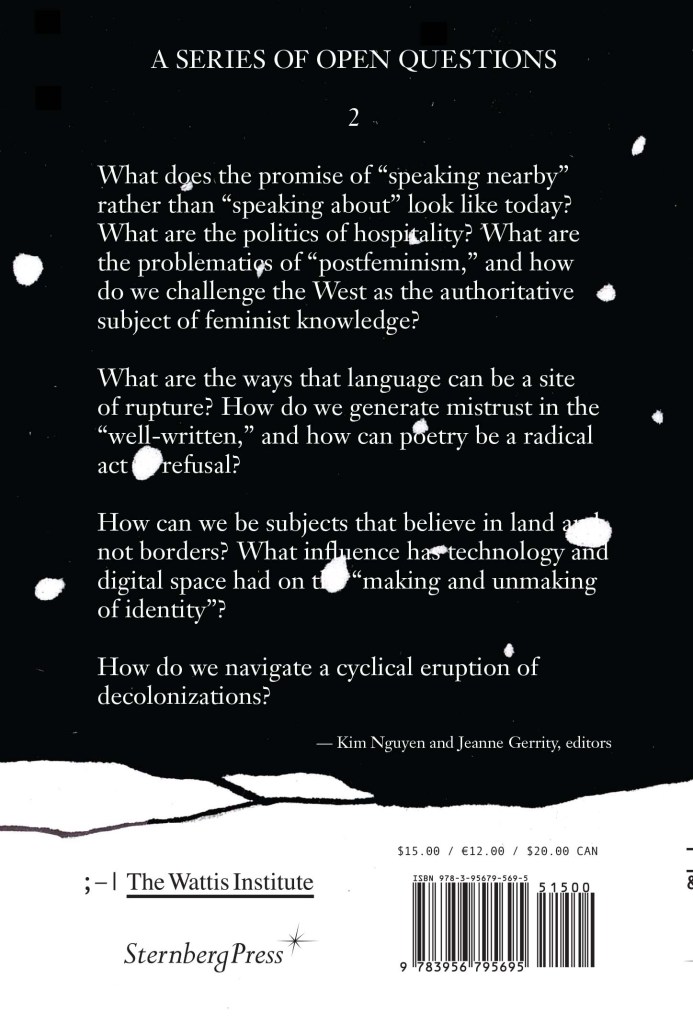

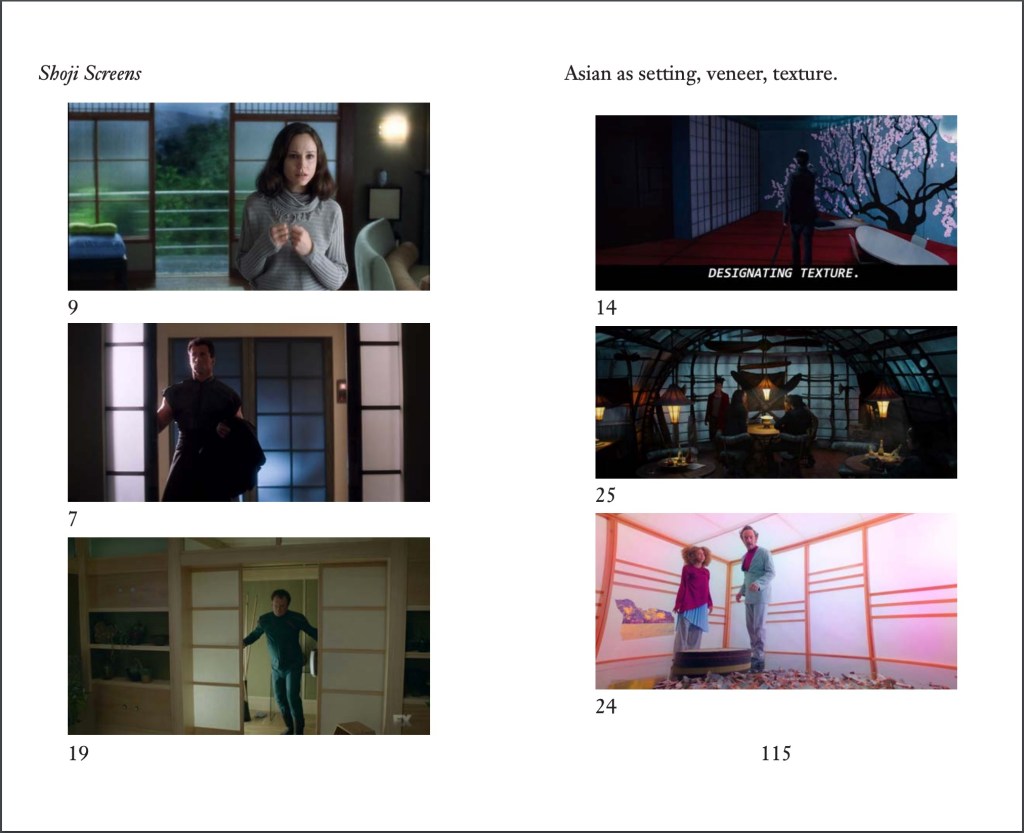
An older, abridged version of “Asian futures, without Asians” in the form of a visual essay is included in:
WHY ARE THEY SO AFRAID OF THE LOTUS? (edited by Kim Nguyen and Jeanne Gerrity).
- Print version (black and white, 39-page spread) published by CCA Wattis Institute (San Francisco) and Sternberg Press (Berlin), June 2021. Distributed by MIT Press.
- Online version (full color, 39-page spread) available for free download from the Wattis Institute Library
A conceptual “course packet” of readings around and inspired by the work of Trinh T. Minh-ha. Driven by the central question “What are we learning from artists today?” the second volume of A Series of Open Questions is informed by themes found in the work of Trinh T. Minh-ha, such as cultural hybridization and fluidity of identity, digital and migratory aesthetics, memory and landscape, decentered realities, feminist approaches to storytelling, meditations on death and myth, post-coloniality and decolonization, and women’s work as related to cultural politics. The contributions to Why are they so afraid of the lotus? embody Trinh’s own weariness around categorization and investigate the ways production can come from and be based in positions of unknowing.
↑
PRESS & QUOTES

THE MICHIGAN DAILY:
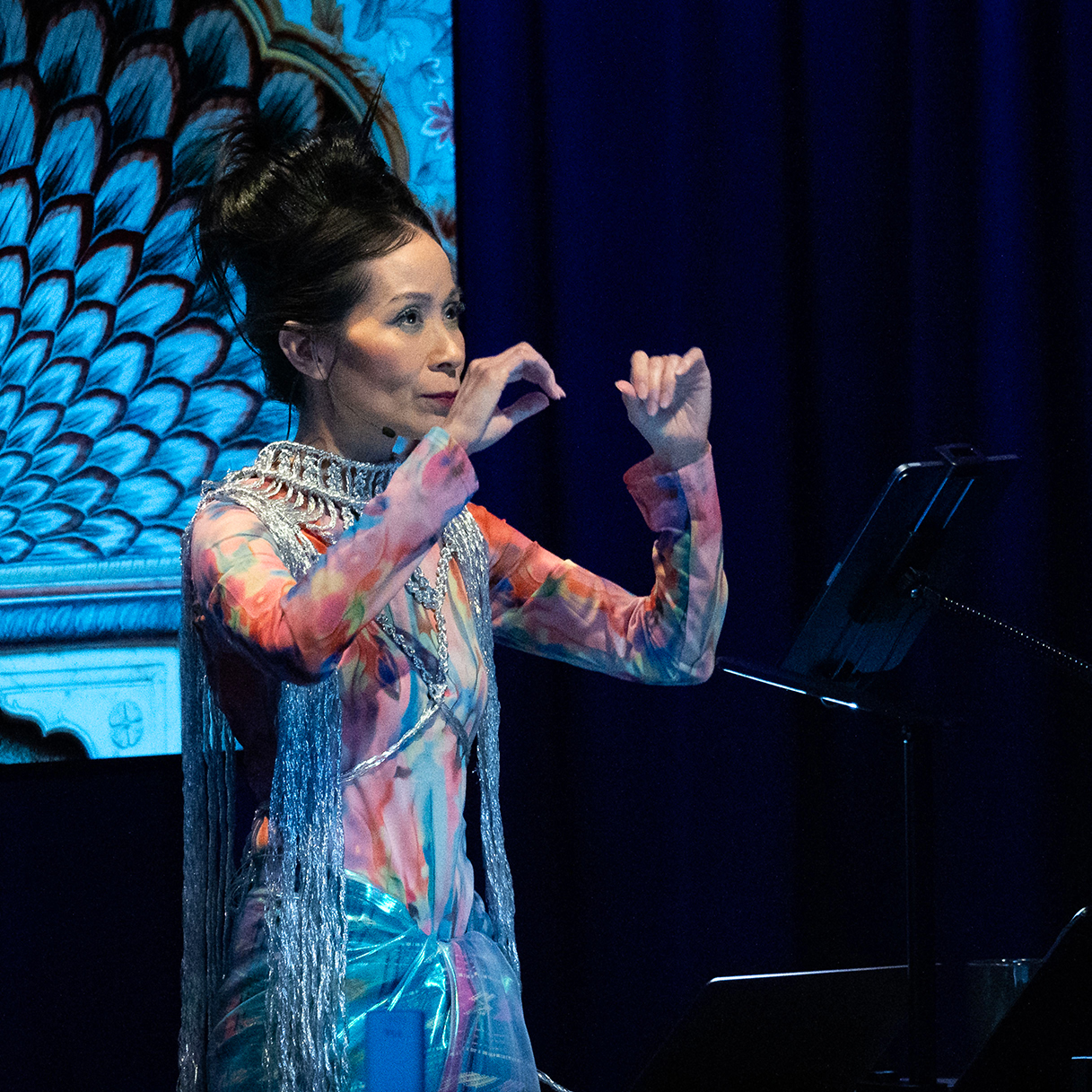
“The on-screen display of movie stills, accompanied by dim lighting and witty commentary, set the tone for a compelling yet brutally honest exploration. In a setting like the one Suparak sublimated, every little gesture incorporated into the presentation became performance art. Each topic transition was marked by sci-fi-esque synth motifs and a spoiler warning, and every purposeful hand movement cut through the air with the grace of a trained dancer. Suparak’s cultural clothing juxtaposed the five screens onstage, which included her three aforementioned devices and two projectors displaying the presentation. […]
Suparak’s extensive attention to subtle thematic elements and the placement of background objects allowed her to display the nuances of appropriation. While some cinematic misrepresentations were more outright, like the misuse and mismatch of cultural artifacts (Asian conical hats, Islamic-inspired fashion, religious iconography), others positioned Asian cultures in more violent settings with red paper lanterns indicating destitute and expendable urban areas. The differing portrayals point to the ambivalence of such representations — in one setting, white fears of “reverse colonialism” are stoked through the Asian personification of nonhuman species, while in other media, Asian cultures simply become aesthetics for white characters to don. The devaluing of Asians sets the tone for Asian and Asian American actors to be sidelined in favor of white actors, or fetishized — often relegated to roles as background members of a crowd or as sex workers, and other times replaced via whitewashing.
After the show and a brief music set, Unviersity Professor Tung-Hui Hu joined Suparak on stage for a Q&A. In the Q&A, Suparak [said] that much of the media she’d meticulously analyzed held little of the nostalgic value for her that it did for others, a result of her choosing not to consume popular media for a period of many years. This practice, a complete media cleanse, clearly made it easier to analyze the faults in all these sci-fi classics, which Suparak does so brilliantly and viscerally in her work. That same attitude toward analysis should be more commonly held.
The subjects of Suparak’s spoiling are worshipped by fans and critics alike, but just as they may admire spiritual simulacra of Buddha statues used as background filler in many of those works, many sci-fi viewers don’t fully understand what they revere. Techno-orientalism is a curse on sci-fi that must be expelled — for what is the use of a future that refuses to bring all of humanity forward?”
— Saarthak Johri, Kristen Su and Thejas Varma, “Astria Suparak’s ‘Asian futures, without Asians’ exposed Orientalism in sci-fi, and that’s needed,” December 3, 2023
THE MICHIGAN DAILY
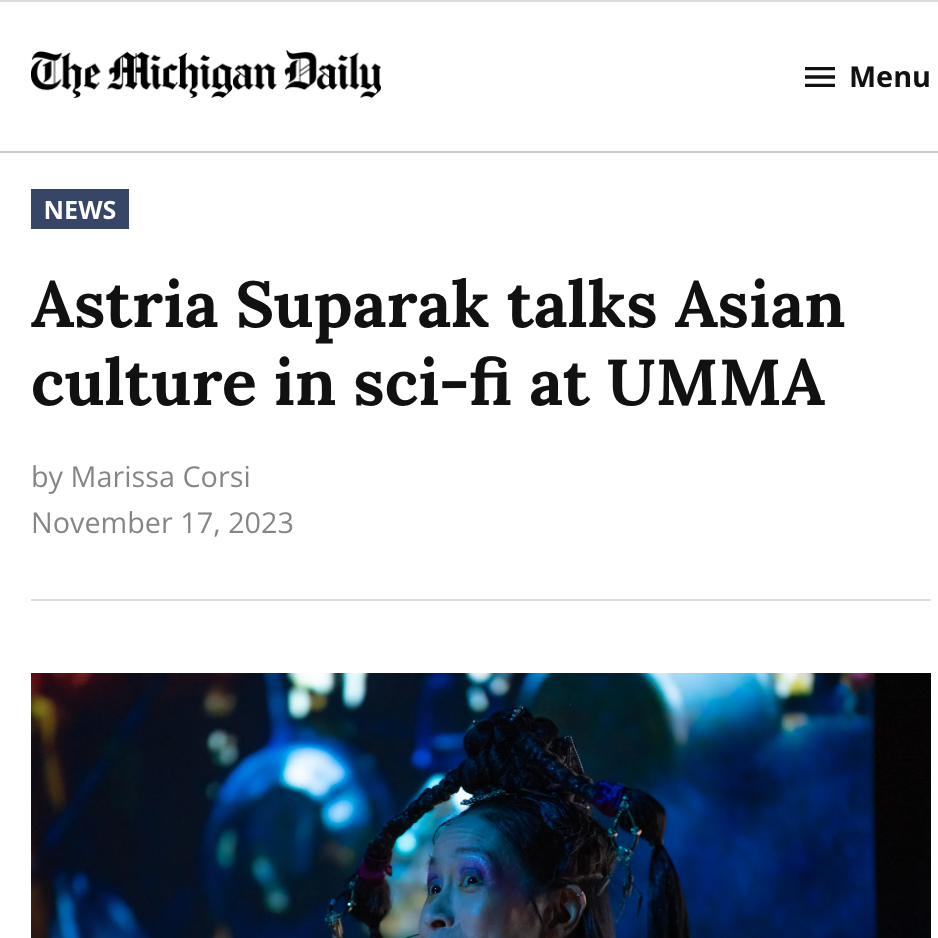
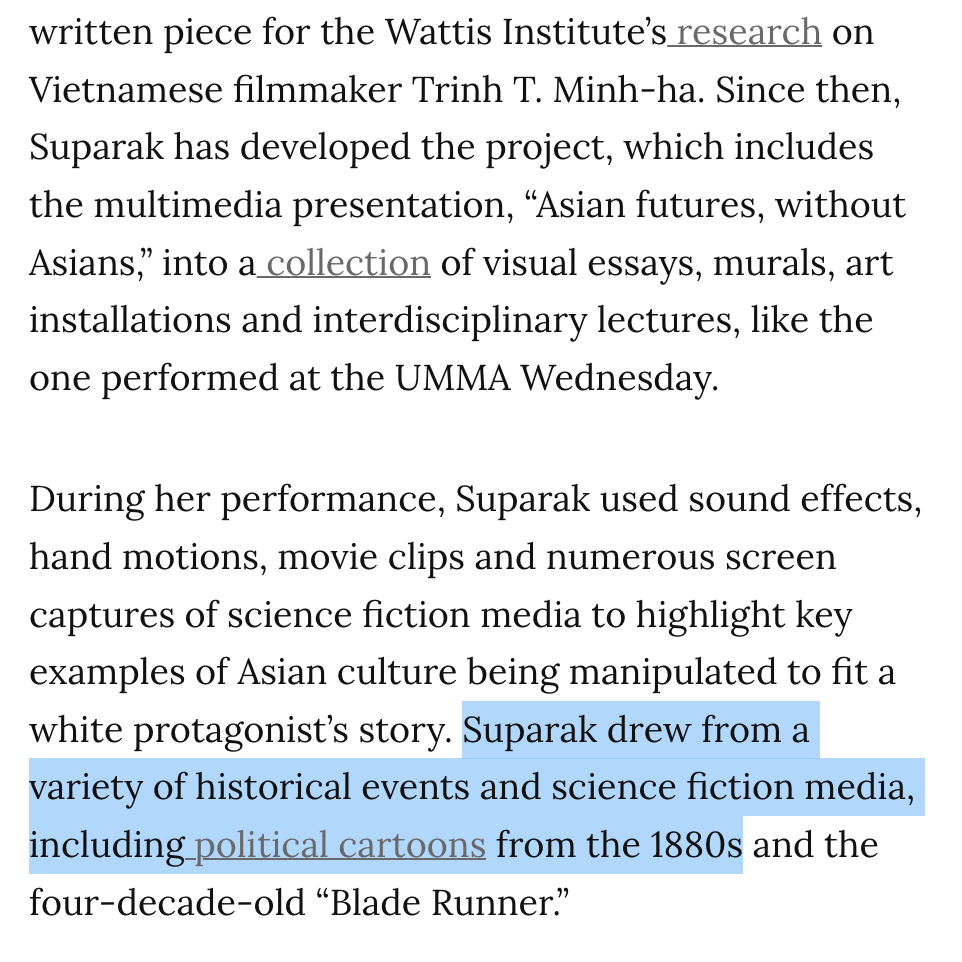
“Suparak, an Oakland-based Thai curator and artist, first developed “Asian futures, without Asians” as a written piece for the Wattis Institute’s research on Vietnamese filmmaker Trinh T. Minh-ha. Since then, Suparak has developed the project, which includes the multimedia presentation, “Asian futures, without Asians,” into a collection of visual essays, murals, art installations and interdisciplinary lectures, like the one performed at the UMMA Wednesday.
During her performance, Suparak used sound effects, hand motions, movie clips and numerous screen captures of science fiction media to highlight key examples of Asian culture being manipulated to fit a white protagonist’s story. Suparak drew from a variety of historical events and science fiction media, including political cartoons from the 1880s and the four-decade-old “Blade Runner.” […]
Art & Design junior Sonia Xiang, organization chair for the United Asian American Organizations, told The Daily they appreciated the more artistic, audience-focused method of multimedia lecture that Suparak utilized.
“The way it was presented was very digestible, with the music, with the elements of humor,” Xiang said. “I’m really happy that this performance was able to take place to further the interest into the topic … I think it opens up a really good starting point for discussions.”
— “Astria Suparak talks Asian culture in sci-fi at UMMA,” Marissa Corsi, Nov. 17, 2023
THE CALIFORNIA AGGIE
Excerpt:
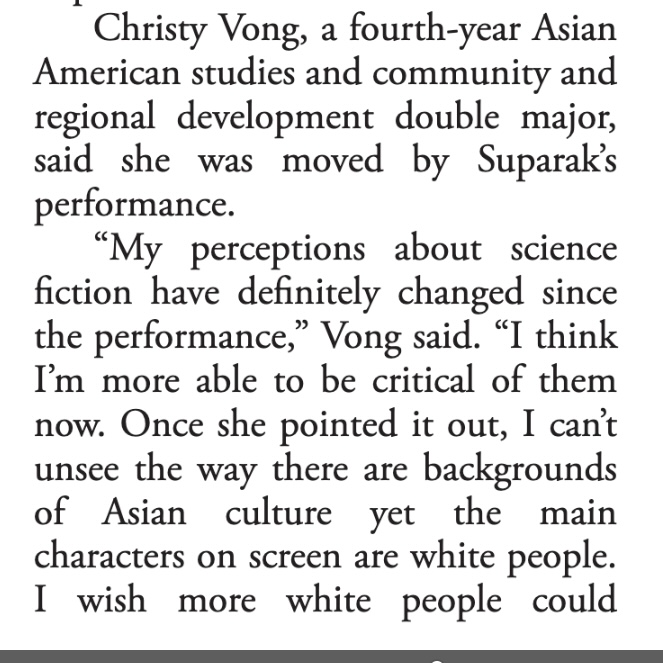
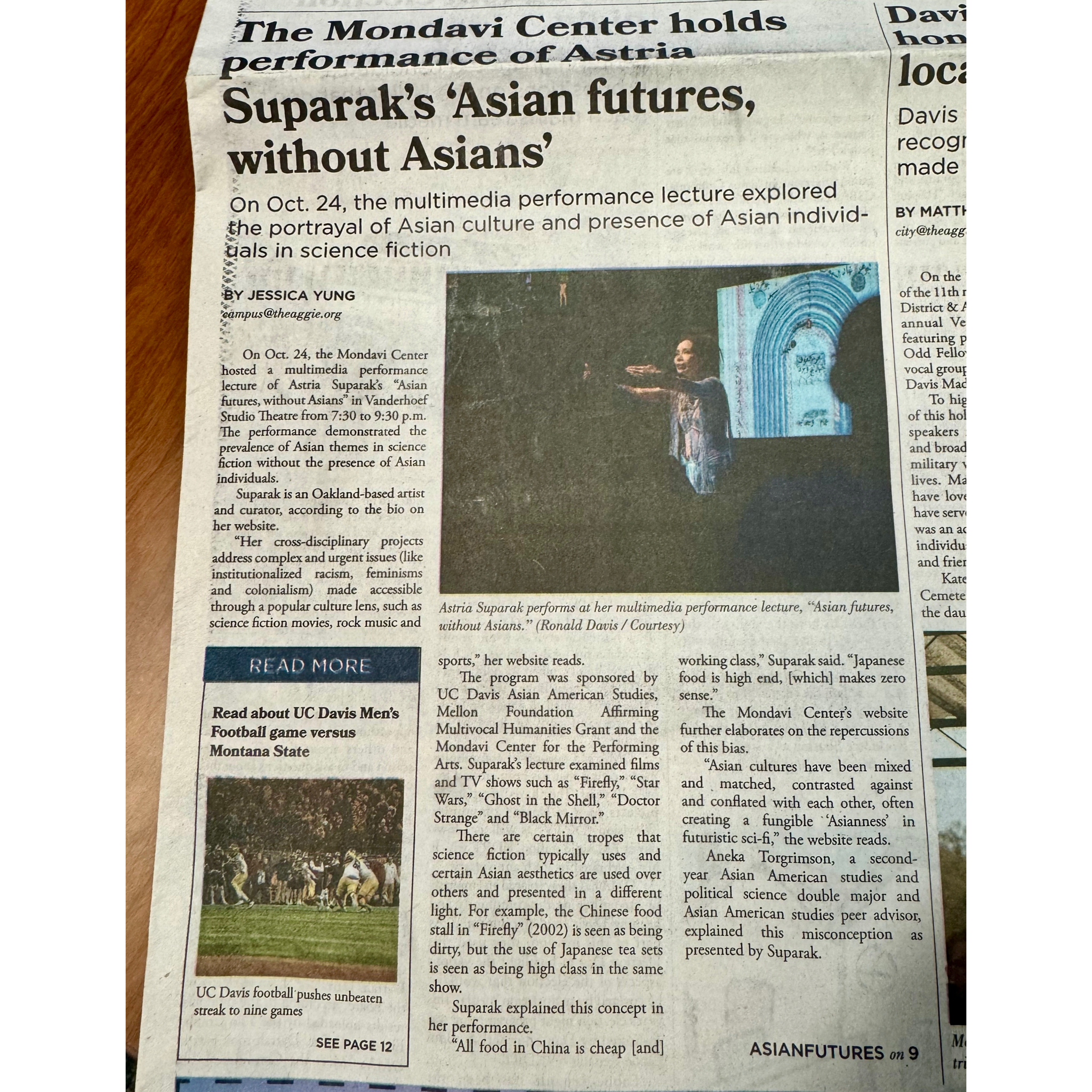
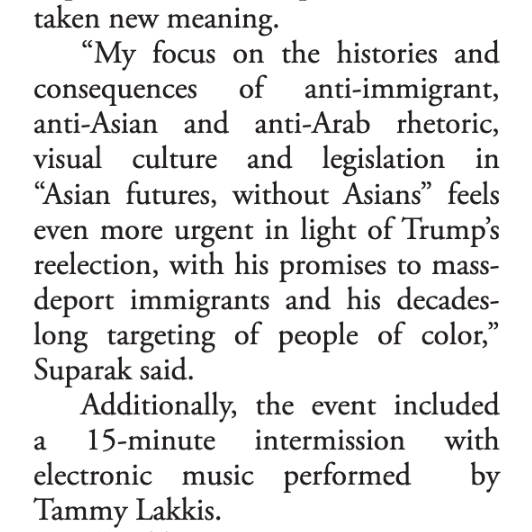
Christy Vong, a fourth-year Asian American studies and community and regional development double major, said she was moved by Suparak’s performance.
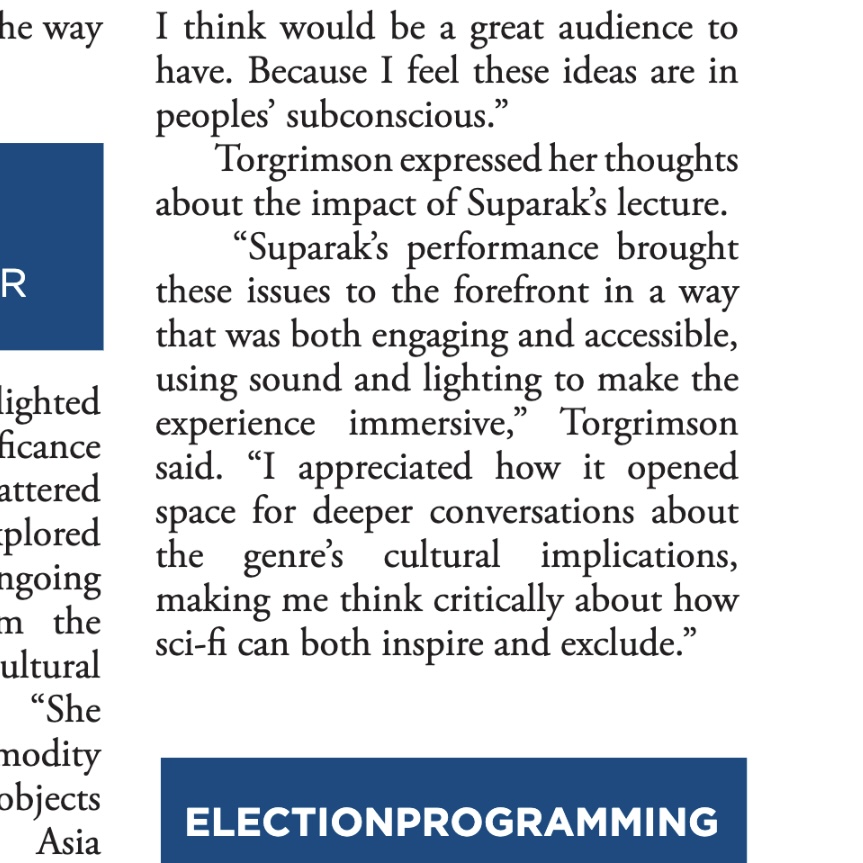
“My perceptions about science fiction have definitely changed since the performance,” Vong said. “I think I’m more able to be critical of them now. Once she pointed it out, I can’t unsee the way there are backgrounds of Asian culture yet the main characters on screen are white people. I wish more white people could watch and listen to this performance. People studying abroad in Asia or involved with Asian culture somehow, I think would be a great audience to have. Because I feel these ideas are in peoples’ subconscious.”
Torgrimson expressed her thoughts about the impact of Suparak’s lecture.
“Suparak’s performance brought these issues to the forefront in a way that was both engaging and accessible, using sound and lighting to make the experience immersive. I appreciated how it opened space for deeper conversations about the genre’s cultural implications, making me think critically about how sci-fi can both inspire and exclude.”
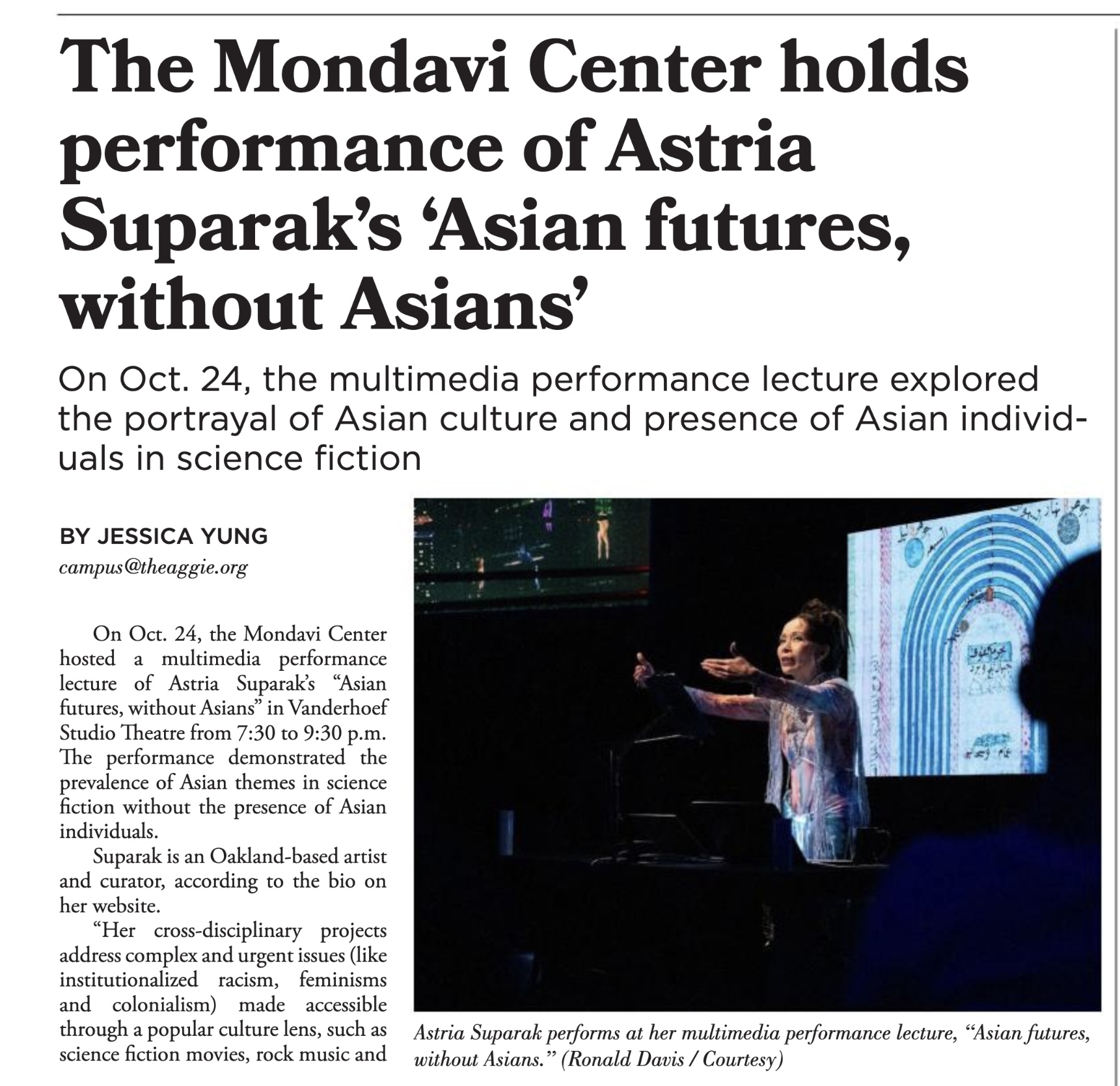
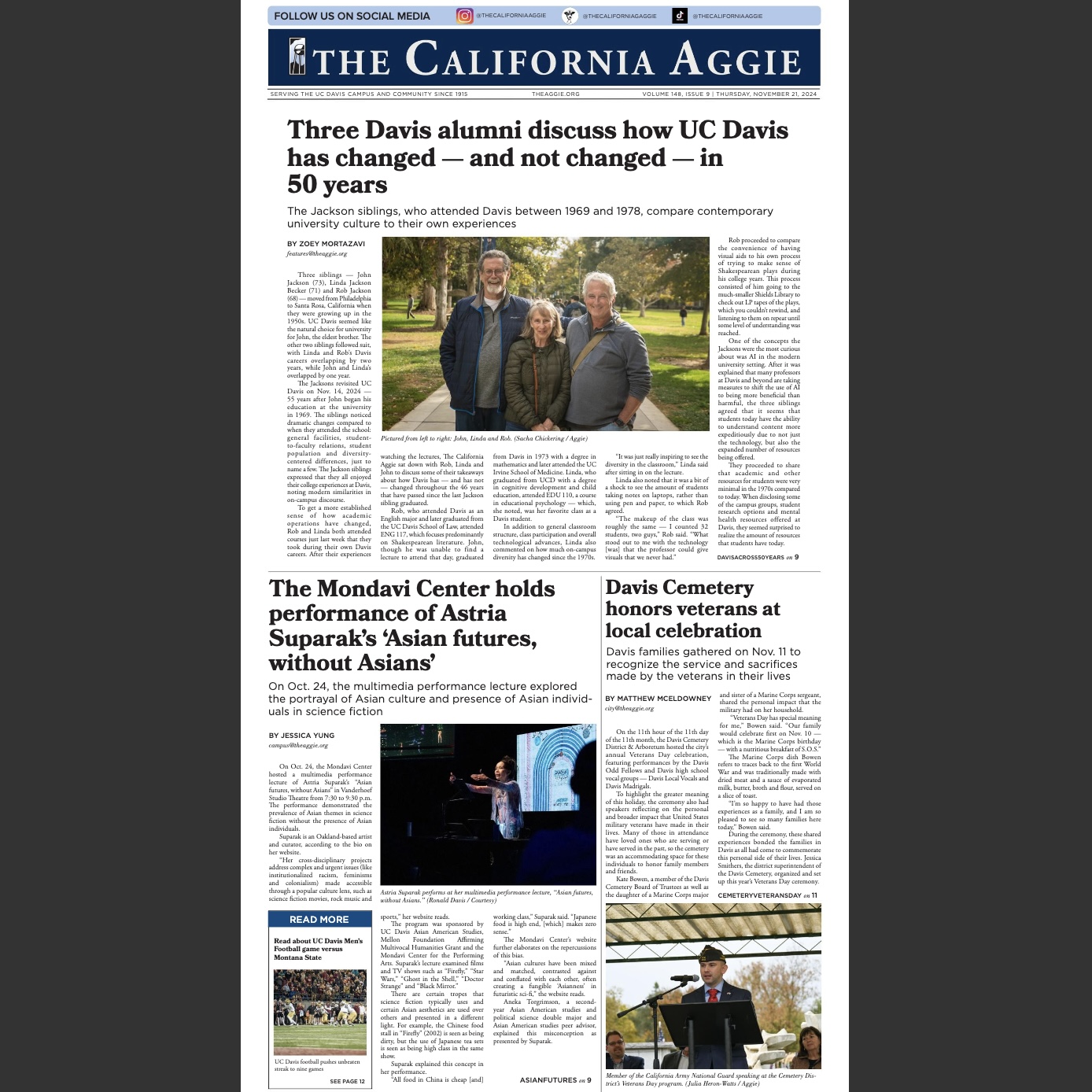
— “The Mondavi Center holds performance of Astria Suparak’s “Asian futures, without Asians“
Jessica Yung, Nov. 21, 2024
RESPONSES
“I was shown a lot of those movies growing up without the critical context to fully appreciate the damage they caused. Your presentation really illustrated the extent and breadth of this problem, and I will forever be more sensitized to it. So, thank you very much for enriching my understanding of cultural representation in Sci-Fi, Fantasy, and beyond.
I also think academics should take note of your immersive approach to delivering high-level analysis and interpretation. Your attunement to aesthetics and sensory modalities elevated the level of engagement.” — Aaron G.
“Thank you, Astria, for making my head spin. There was so much that you presented that brought up all kinds of ideas, and from a variety of standpoints for me. It is simultaneously sobering and depressing, but I do feel some hope as well, for how things might continue to change.
One of the things that struck me as I was watching this presentation was how we might think a lot of these decisions are harmless aesthetic choices, to create a view or ambiance about the future. But it’s actually causing harm — there are forms of injury being caused here. We can think of it as structural or cultural violence that may be indirect or not obvious to us. But when we delve deeper we can see the longer term consequences of the harm that can be caused… Those are some of the things that come to mind when I think about the connections between film, artifacts, ethnography, and power.” — Nam Kim, Professor, Department of Anthropology, University of Wisconsin-Madison
“One of the things that stood out to me when watching your performance was just how multi-dimensional this process of representation was. It really laid bare how many hands are involved in crafting these narratives. This is the work of not just directors, but also of production designers, costume designers, prop makers, and casting directors. It makes you see how ingrained it is when it’s not one person making this decision, but an entire team that seems to be thinking with the same problematic imaginary framework. The other thing that stood out was the continuity of all of this—we’re talking about 60 years of seeing the same storytelling patterns. I really appreciated the sense of history here.” — Derek Johnson, Department Chair, Media & Cultural Studies, University of Wisconsin-Madison
“That performance was transformative”— student at University of Wisconsin-Madison
See press for the earlier versions of the performance here, including The New York Times, KQED, 4Columns, V Magazine, Variable West.
↑

COLLECTIONS
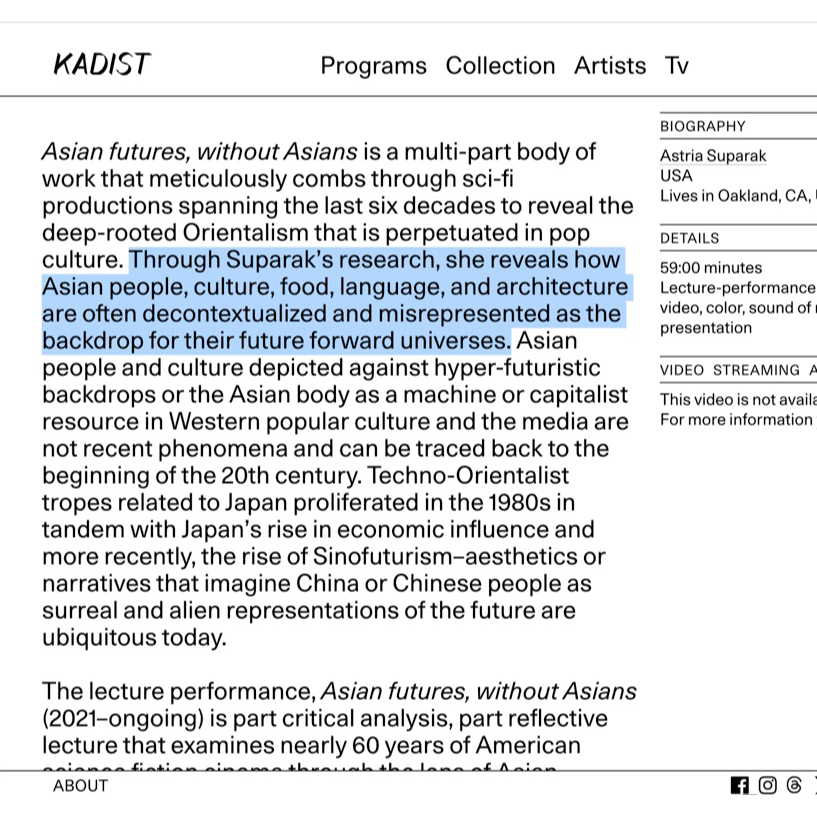
Earlier video versions of Asian futures, without Asians are part of the collections and archives of:
- Kadist, San Francisco + Paris
- University of Oregon Libraries
- Centre A: Vancouver International Centre for Contemporary Asian Art
↑
RELATED WORKS
- “Asian futures, without Asians” online performance
- “Virtually Asian” video
- “Finite Horizon” installation
- “Pyramid Schemes” sculptures
- “Asian Futures” multipart research series, which includes videos, installations, collages, essays, publications, and other projects
- See other #scifi works
 Astria Suparak